
Binding is the folded strip of tape sewn over a raw edge: the edge of a floor mat, the opening of a bag, the perimeter of a sports pad, the hem of a boat cushion. Done well it is nearly invisible and it outlasts the product. Done badly it is the first thing a customer notices. This guide explains how a binder attachment works, why binding is usually done on a cylinder arm machine, how to choose tape and folder, and how to set one up, using the SEWPRO 335VB as the worked example because it is built for exactly this job.
What a binder does
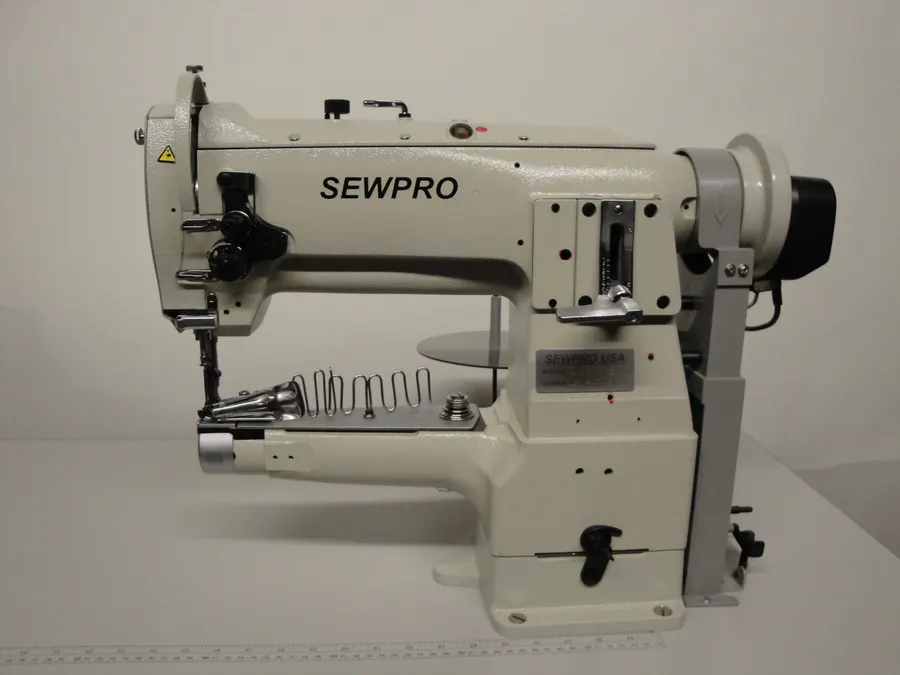
A binder, also called a folder or binding attachment, is a formed metal funnel mounted in front of the needle. Flat tape enters the wide end, the funnel folds both edges of the tape under as it narrows, and the folded tape comes out of the narrow end wrapped around the edge of your material, which is guided into a slot in the side of the funnel. The needle sews through all of it at once: the top fold of the tape, the material, and the bottom fold. One pass, one seam, finished edge.
Without a binder, binding is a two-pass job: sew the tape to the back, fold it over, topstitch the front, and hope the second row catches the first fold all the way around. A binder turns that into a single pass at full speed with a consistent fold, which is why any shop that binds more than a few pieces a week runs one.
Why a cylinder arm
Most binding goes around a curved edge: the rounded corner of a mat, the circumference of a round cushion, the opening of a bag. On a flatbed the part of the piece that is not being bound has to lie on the table, and at a tight curve it buckles against the binder and the fold opens up. On a cylinder arm the piece hangs over the narrow arm; only the edge being bound is on top, and the operator can swing the piece around a curve while the binder keeps feeding tape straight. That is the 335 class: a medium-duty compound feed head on a slim cylinder bed, the most common binding platform in the trade.
The 335VB adds a large M bobbin so you are not changing bobbins every mat, a 6mm stitch that looks right on binding, and a 14mm foot lift to get thick pads under the binder. It runs thread from 46 up to 138 with 135x17 needles, so it binds everything from bag lining to heavy carpet.
Choosing tape
| Vinyl binding | Automotive carpet, floor mats, marine cushions. Flexible, waterproof, comes in colors to match. |
|---|---|
| Polyester or acrylic binding | Marine canvas, awnings, outdoor gear. UV resistant, matches Sunbrella-type fabric. |
| Cotton or poly twill tape | Sports pads, bags, blankets. Soft, takes a fold well. |
| Nylon webbing | Cargo nets, heavy bags, mats that take abuse. Stiff; needs a larger folder and a heavier needle. |
| Leather binding | Leather goods, saddlery. Skived and pre-folded, run through a plain guide rather than a folding binder. |
Tape width is measured flat. A 1 inch flat tape folds to roughly 3/8 inch finished on each side. The binder is made for one flat tape width; using a different width means a different binder. Decide on your tape before you order the attachment, and send us a yard of it so the binder is adjusted to the tape you actually use.
Choosing a binder
Binders come in a few types and the names vary between makers, but they fall into three groups.
- Single fold. Both tape edges fold under once. The common type for vinyl and twill binding. Finished width is about a third of the flat tape.
- Double fold. Each edge folds twice so no raw edge shows even on the inside. For woven tapes that fray; uses more tape.
- Right angle or swing-away. The binder is on a hinged bracket so it swings out of the way for seams that are not bound. Useful when one machine does both binding and plain seams.
A binder is also sized to the thickness of what you bind. A mat binder has a wide mouth for a thick pad; a bag binder has a narrow one. Tell us the thickness of the thickest piece you bind.
Setting up a binder
1. Mount and align
The binder bolts to the bed in front of the needle. Its outlet has to sit so the needle lands in the middle of the folded tape edge, about 1/16 to 3/32 inch from the fold. Too close to the fold and the stitch misses the bottom layer; too far in and it looks wrong. Use the slotted mounting holes to move it left and right, and a scrap of your tape to check.
2. Feed the tape
Cut the tape end to a point, feed it into the mouth of the binder and pull it through the outlet with pliers until a few inches hang out. Make sure both edges are folding under evenly; a binder with a slightly bent lip folds one side more than the other and the finished binding is off center.
3. Set the foot and feed
The 335VB uses a binding presser foot with a narrow left toe so the tape runs beside it. Foot pressure should be light; the binder is doing the guiding, the foot only needs to hold the stack for the feed. Stitch length 4 to 6mm. Needle 120 to 140 for vinyl tape on carpet, 110 for twill on pads.
4. Tension
Binding is seen from both sides, so balance the stitch so the knot sits inside the stack. On vinyl tape, a slightly looser top tension than you use for plain seams avoids puckering the tape between stitches.
5. Corners and curves
Inside curves feed themselves. Outside curves need the operator to ease the piece around while keeping the edge in the binder slot; slow down and let the cylinder arm do its job. Sharp corners are mitered: stop with the needle down a tape width before the corner, fold a miter in the tape, pivot, and continue. Practice on scrap until the miters match.
6. Starting and finishing
Start with two inches of folded tape hanging out so the first stitches have something to hold. Finish by overlapping the start by an inch, folding the raw end under, and sewing across. Trim the tape with the binder scissors, not by pulling.
Troubleshooting
- Stitch misses the underside of the tape. Binder too close to the needle; move it left. Or tape not folding fully; check the lip.
- Binding puckers. Top tension too tight, or the tape is being pulled into the binder under tension. Let it feed freely from a reel.
- Fold is wider on one side. Binder lip bent or tape not centered in the mouth. Adjust the mouth guides.
- Material slips out of the slot on curves. Slow down, and keep the edge against the back of the slot. Check the slot width matches the material thickness.
- Skipped stitches on carpet. Needle too small or dull for the rubber backing. Go up a size, change it, then check timing.
Questions people ask
Can I bind on a flatbed?
Straight edges and gentle curves, yes, with a binder attachment. Tight curves and tubular openings want a cylinder arm. Most shops that bind regularly run a dedicated cylinder arm binder.
Does the 335VB come with the binder?
Yes. We fit the binder for the tape you send us, set it up and sew a sample before it leaves. Extra binders for other tapes are available.
What else can the 335VB do?
With the binder swung away it is a medium-duty cylinder arm walking foot for bags, boot shafts and curved seams in leather and vinyl.
Is there a video of carpet binding?
Yes, Sergey's video on binding automotive carpet is on the videos page and on our YouTube channel.
Machines in this article
Talk to us
Send us a yard of your tape and a piece of what you bind. We will set a 335VB up for it and send you the sample before you decide.
Related: sewing machines for automotive upholstery, cylinder arm machines.