
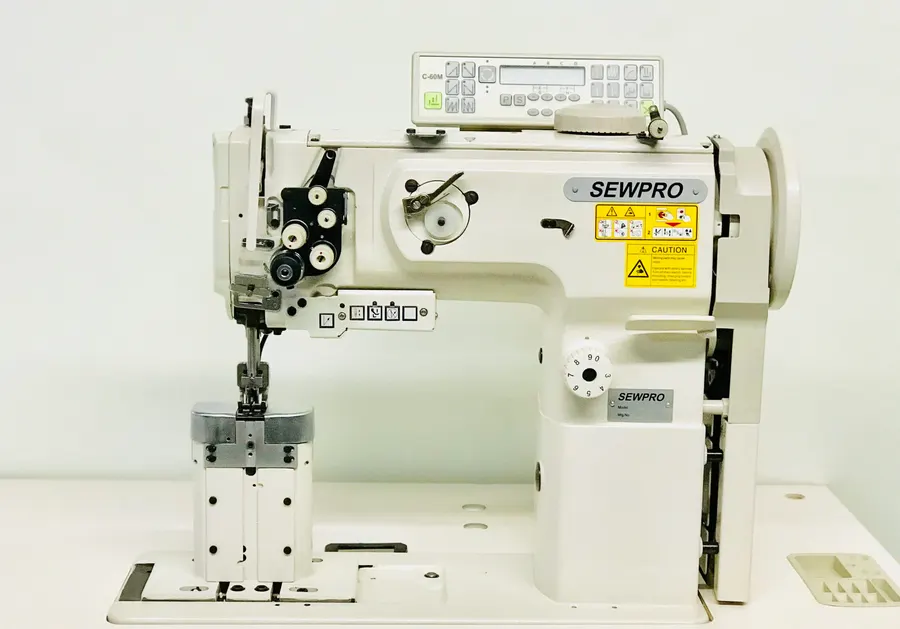
A post bed machine looks odd the first time you see one: the needle plate sits on top of a narrow steel column rising six, seven or even seventeen inches above the table. The column is the whole point. This article explains what it lets you do, the feed systems post beds come with, how to choose the post height, and which products are made on them. If you sew footwear, bags, caps, automotive trim or anything else that has to be turned under the needle rather than pushed across a table, this is your machine.
Why the sewing point is up on a column
On a flatbed, the material lies on a table and you push it under the needle. That works when the piece is flat or can be flattened. It fails when the piece is a shape: a shoe upper already closed into a tube, a structured handbag with a stiff bottom, a baseball cap, a headrest cover. You cannot lay those flat, so on a flatbed the parts you are not sewing drag on the table, fold under the foot, and fight you at every curve.
Raise the needle plate onto a post and the problem goes away. The piece hangs down around the post; only the seam you are sewing is on top. You rotate the whole thing around the column as you go, with both hands free to guide it, and the rest of the product stays out of the way below. A cylinder arm machine solves a similar problem for tubes that run horizontally; a post bed solves it for shapes that are deep or need to be turned on the spot.
The feed systems, and why they matter more on a post bed
Because the needle plate on a post is small, the feed has less surface to grip than on a flatbed. That makes the choice of feed system more important here than on any other kind of machine. Post beds come in three main types.
Roller feed
A knurled wheel on top, sometimes a second one below, turns against the material and drives it forward. There is no presser foot in the usual sense. Roller feed is fast around tight curves because the contact patch is tiny, which is why shoe uppers are almost always closed on roller feed post beds. It marks soft leather less than a walking foot, and it lets the operator pivot constantly. It grips less hard, so it is for light to medium work: shoe and boot uppers, gloves, light bags.
Triple feed walking foot (compound feed)
The same needle, inner foot and feed dog system found on heavy flatbeds, mounted on a post. It grips hard and feeds thick, layered or slippery stacks evenly: leather over foam, vinyl with a welt, multiple layers of bag body. It is the choice for automotive trim topstitching, heavy bags, and anywhere the thread is 138 or heavier. The 1710D and 1760 in our catalog are triple feed post beds.
Wheel feed with driven roller presser
A hybrid: a feed wheel below and a driven roller above, so both surfaces move the material. It is a step up in grip from plain roller feed while keeping the small contact patch that lets you pivot fast. Common on heavier footwear and on bag factories that run medium leather at speed.
Standard post or high post
Post height is measured from the table to the needle plate. A standard post is about 7 inches (178mm). That is enough for shoes, caps, most bags and automotive trim pieces. A high post is 12 to 17 inches. You want a high post when the product is deep: a riding boot shaft, a large duffel bag, a tool case, a saddlebag, where a seam has to be sewn near the opening while the rest of the product hangs well below.
Our 18365-17 and 8360BL are 17 inch high post machines. The 8360BL also has a 360 degree rotating feed, which means the roller presser and the feed wheel turn to follow the direction of the seam, so the operator sews a continuous curve without rotating the whole boot around the post. It is the machine for closing tall boot shafts and for decorative stitching on western boots.
Single needle or double needle
Double needle post beds sew two parallel rows at once, and on a post bed the two rows are usually decorative: the double topstitch along a boot vamp, the parallel rows on a bag handle base, the French seam on an automotive headrest. A split needle bar lets you drop one needle at a corner so both rows turn cleanly. The 243H-P2 is our double needle triple feed post bed, built for heavy thread; the 18365 series includes double needle variants.
What gets made on post beds
- Footwear. Closing uppers, attaching linings, decorative stitching on boots, repairs. Nearly every shoe you own passed over a post bed.
- Handbags, backpacks and luggage. Assembling bodies and gussets, attaching handles and straps, topstitching around a stiff bottom.
- Automotive trim. Headrests, armrests, shift and brake boots, steering wheel covers, the decorative stitch on a center console.
- Caps and hats. Visor attachment and crown seams.
- Gloves, sports equipment, holsters. Anything shaped, with a seam that runs around rather than across.
- Furniture. Fewer than you might think, but tufted and pulled pieces, piping on shaped cushions and decorative seams on arms use one.
What a post bed is bad at
Long straight seams on flat panels. The small needle plate gives the material less support, the operator has no table to slide a big piece on, and the machine is slower than a flatbed on that kind of work. A shop that sews both shaped and flat pieces owns both machines; nobody closes sofa cushions on a post bed if they can help it. The other weakness is heavy thread capacity: roller feed post beds are light to medium duty by design. For 207 thread and up you need the triple feed models.
Reading a post bed spec sheet
| Post height | 7 in standard; 12 to 17 in high post for deep products |
|---|---|
| Feed type | Roller, wheel with driven roller presser, or triple feed walking foot |
| Hook | Standard for footwear; large or extra large for heavy thread |
| Needle system | Usually 134-35 (DPx35) or 190; longer than a flatbed needle |
| Thread range | 46 to 92 on roller feed; 69 to 207 on triple feed |
| Stitch length | 4 to 5mm roller; up to 8 or 9mm triple feed |
| Needle count | Single, or double with split needle bar |
| Rotation | Fixed, or 360 degree rotating presser on some high post models |
Setting up and running a post bed
Because the operator turns the work rather than pushing it, the needle positioner matters even more than usual: every stop should put the needle down in the material so the piece can pivot without losing its place. A servo motor with slow speed control is the second essential; post bed work is rarely fast. Light is the third. The sewing point is high and small, so an articulated lamp aimed at the needle plate pays for itself in the first week.
On roller feed machines keep the knurled wheels clean; dried glue and leather dust fill the teeth and the feed starts slipping. On triple feed post beds set the foot pressure as light as will still feed evenly; too much pressure marks leather and makes pivoting hard. Change needles often. Post bed needles are long and deflect more than flatbed needles, so a slightly bent one skips stitches sooner.
Questions people ask
Can a post bed replace a cylinder arm?
Sometimes. Both reach places a flatbed cannot. A cylinder arm is better for horizontal tubes you slide over the arm (bag bottoms, sleeves, belts). A post bed is better for things that hang down and turn (shoe uppers, caps, headrests). Many shops end up with one of each.
Is a post bed hard to learn?
It is different, not harder. Operators used to a flatbed need a few days to get used to turning the work rather than pushing it. After that most find curves easier on the post bed than they ever were on a table.
What thread can a triple feed post bed run?
The 1760 and 1710D run bonded thread from 69 up to 207 with the large hook. The roller feed footwear machines are happiest from 46 to 92.
Do you sell post beds with a table attachment?
Yes. A drop-in table surrounds the post and turns it into a small flatbed for the occasional flat seam. It comes off in a minute.
Machines in this article
- SEWPRO 1760Post-Bed Double Needle Unison Feed Lockstitch Machine
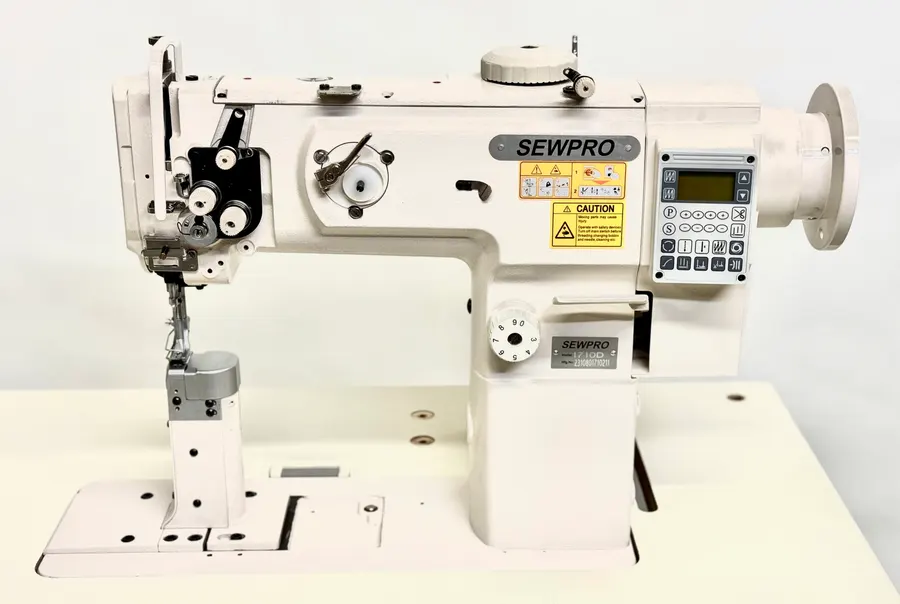 SEWPRO 1710DPost-Bed Lockstitch Sewing Machine with Direct Drive
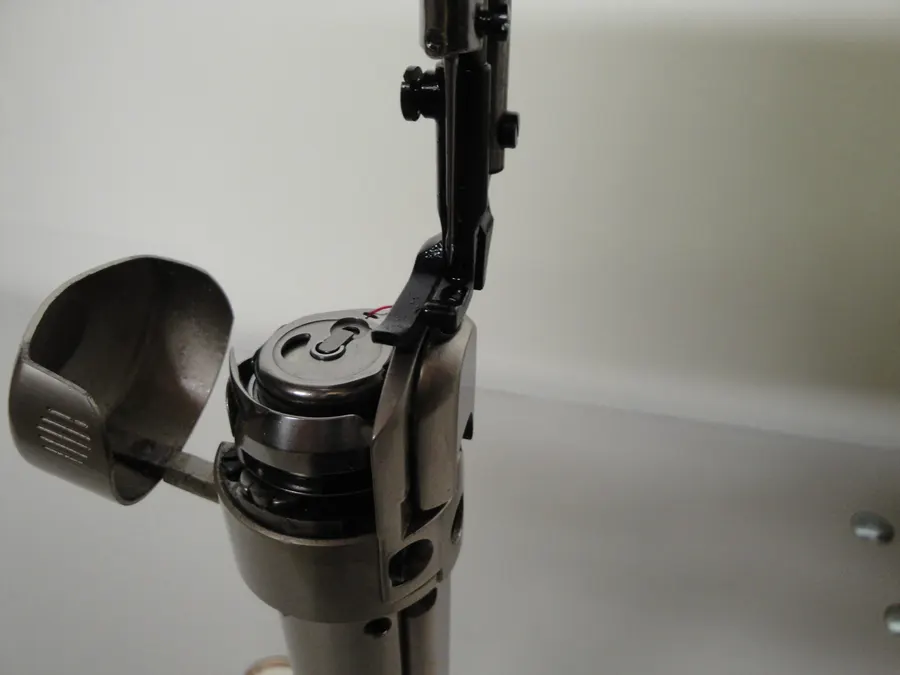 SEWPRO 18365-17Extra High Post-Bed Walking Foot Lockstitch Machine
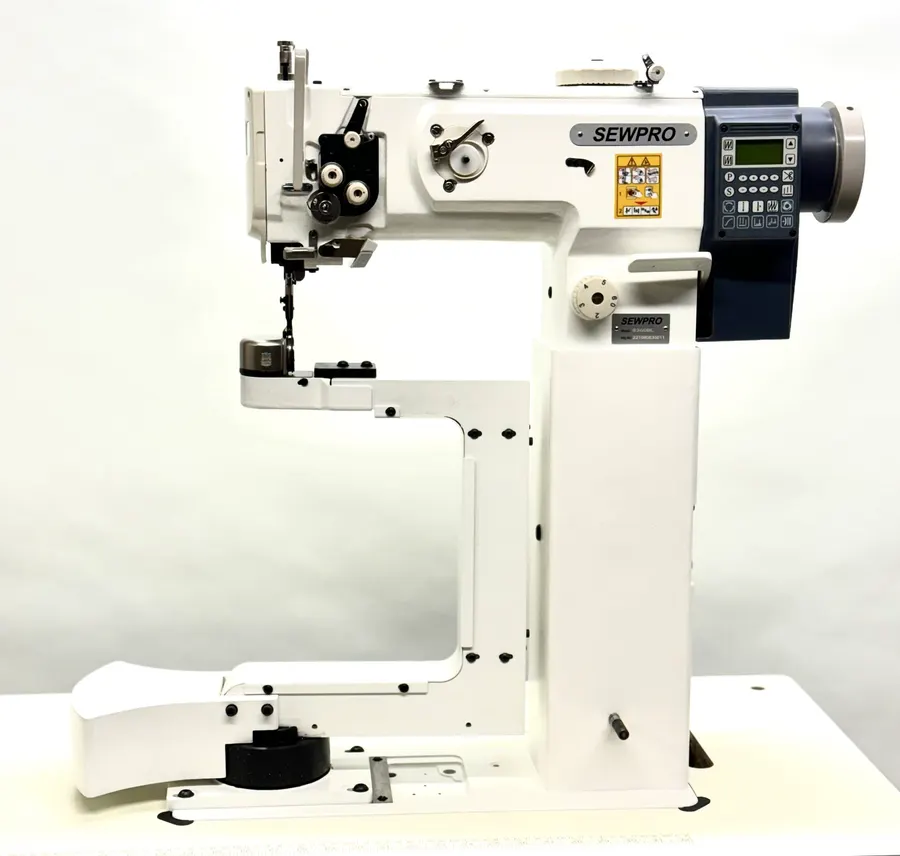 SEWPRO 8360BL17" high post bed triple feed lockstitch machine
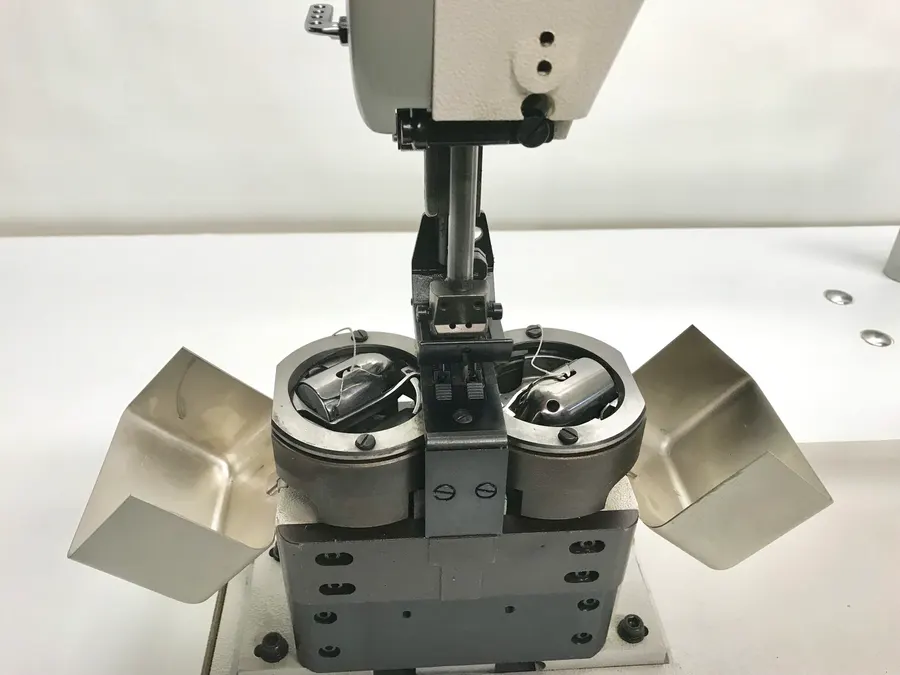 SEWPRO 243H-P2Extra Heavy-Duty Post-Bed Double Needle Sewing Machine
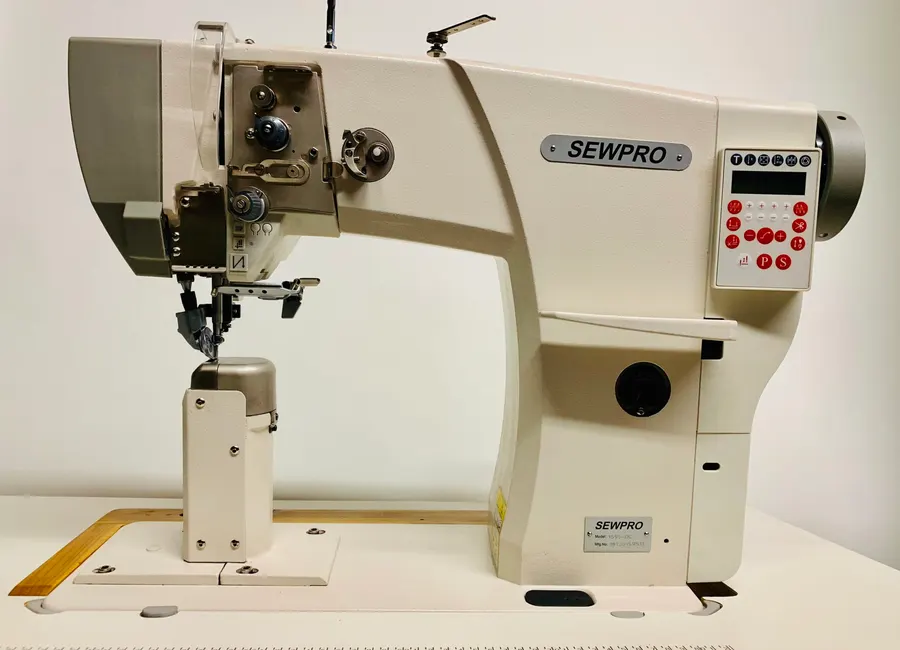 SEWPRO 1595-DLPost-Bed Roller Feed Sewing Machine for Leather and Upholstery
Talk to us
Sewing shaped pieces and fighting a flatbed? Send a sample and we will sew it on a post bed and send you the video.