
A long arm costs more, weighs more and takes up more floor than a standard head, and for a lot of shops it is the best money they ever spent. For others it is a big machine that sews exactly the same seams the old one did. The difference is the work, not the brochure. Here is how to tell which shop you are, what the arm lengths actually buy you, and the two or three things to check before you order one.
What a long arm is
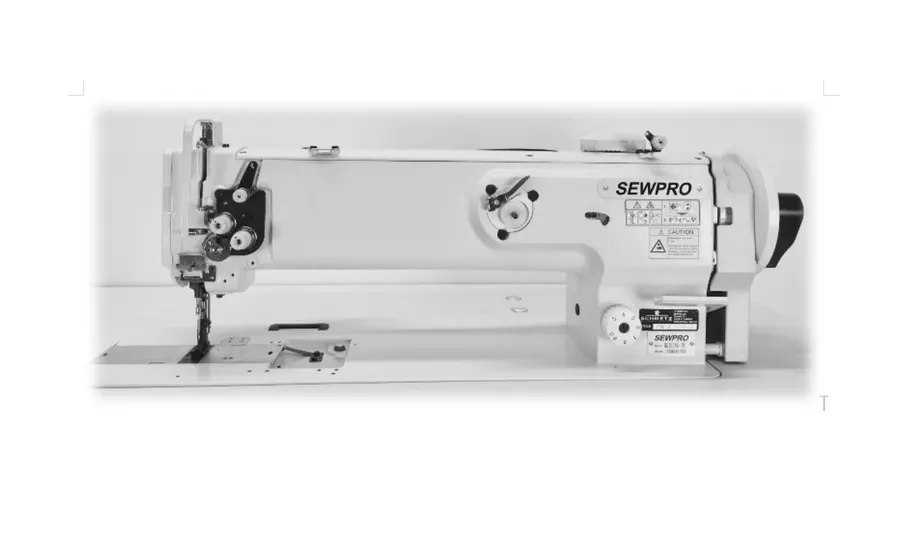
Every sewing machine has a space between the needle and the vertical part of the arm, called the throat or the arm space. On a standard industrial head it is about 10 to 10.5 inches wide and 5 inches high. A long arm machine stretches that to 18, 20, 25 or 30 inches, sometimes with more height as well. Mechanically it is the same head: the same compound feed, the same hook, the same stitch length and thread range as its standard-arm sibling. The 1508L-18, for example, is a 1508 class walking foot with an 18 inch arm; it sews like a 1508NH with more room.
That extra room is the whole product. Everything a long arm does for you comes from being able to put more material to the right of the needle without rolling, folding or repositioning it.
Who actually needs one
The shops that run long arms all day have one thing in common: the seam they are sewing is often in the middle of a large, stiff piece.
- Marine canvas. A bimini top or a cockpit enclosure is a big piece of acrylic with vinyl windows. The seams between panels run through the middle of the finished cover. On a 10 inch arm the operator rolls the cover tightly, feeds the roll through the throat, and unrolls as the seam progresses, fighting the roll the whole way. On an 18 inch arm it mostly just slides.
- Sail lofts. A mainsail panel seam can be 20 feet long with half the sail to the right of the needle. 25 and 30 inch arms are standard loft equipment, often with a zig-zag head.
- Awnings, tents, tarps and truck covers. Same problem, often heavier material and heavier thread.
- Automotive carpet and headliners. A molded carpet set or a headliner is one large piece that has to be bound or seamed around its edge while the rest of it swings around the machine.
- Upholstery shops doing sectionals, mattresses and RV interiors. Not every day, but often enough that the long arm earns its keep.
- Quilted panels and pads. Moving blankets, horse pads, insulated covers: wide quilting runs are much easier with room.
Who does not
A shop that sews cushions, bags, belts, straps, garments, shoes or anything else where the piece to the right of the needle is small. For those shops the long arm sews the same seam the standard machine does, slightly slower to set up because the head is heavier to thread and the table is bigger to reach across. If the biggest regular job in your shop fits comfortably through a 10 inch throat, put the money into a better motor, a second head or a pattern sewer instead.
Which arm length
There is a temptation to buy the longest arm you can afford. Resist it. Longer arms cost more, need bigger tables, and the extra reach only helps if the work is wide enough to use it.
| 18 inch | Marine canvas, upholstery, automotive carpet, awnings. The all-round long arm and the one most shops should buy. |
|---|---|
| 20 inch | Same as 18 with a little more room; often the heavy 8BL class with barrel shuttle for 415 thread. |
| 25 inch | Sail lofts, large awnings, truck tarps, industrial covers. Table is about 6 feet wide. |
| 30 inch | Full-size sails, quilted panels, insulated covers, wide industrial textiles. A large footprint; buy for a specific job. |
A useful test: measure the widest piece you sew regularly, folded or rolled as little as you can tolerate, from the seam to the far edge. If that is under 15 inches, an 18 inch arm handles it with room to spare. If it is 20 inches or more, you are a 25 inch shop. Buy for the job you do every week, not the one you did once.
The features that matter on a long arm
Hook and thread capacity
Long seams in heavy material eat thread, so a large hook with an L or M bobbin is the minimum. Marine and tarp work runs 92 to 138; truck covers, slings and heavy tarps run 207 to 346 and need a barrel shuttle hook like the one on the 8BL series or the 733-30.
Foot lift
Big pieces are also thick pieces at the seams. Look for 14 to 16mm of lift, and seriously consider the air foot lift that the -7 models have: with a big piece in both hands, pressing a pedal to lift the foot beats reaching for a knee lever.
Automatic thread trimmer and back-tack
On a standard machine these are a convenience. On a long arm with a 15 pound cover under the needle they are a real time saver, because reaching the thread with scissors around a big piece is awkward, and back-tacking by hand while holding the piece in place is worse. The 0617DL-18-7, 1510L-18-7 and 1510L-25-7 have both, plus a needle positioner.
Puller feed
On very long straight seams in canvas a puller, a driven roller behind the foot, keeps tension on the material and prevents the slight stitch shortening that happens when heavy fabric drags. Sail lofts and awning shops often add one.
The table
A long arm is only as useful as the surface around it. The standard long arm table is 60 inches wide; many shops add a drop-down extension to the left and a flat surface behind so the piece has somewhere to go. Think about where the material lands before you order.
Zig-zag long arms
Sail lofts need both reach and a zig-zag stitch, so there is a category of long arm zig-zag machines. The 2153L30 is a 30 inch arm with a wide zig-zag bite. Set the bite to zero and it is a 30 inch straight stitch walking foot. For a small loft that is the one machine. See our separate guide on large-scale zig-zag.
Buying used
Used long arms are around and can be good value, but check three things: the arm casting for cracks near the base (long arms get knocked), hook timing and wear (long arm hooks live hard lives in canvas dust), and whether the table and stand come with it, because a long arm table is expensive to buy separately. Budget for a servo motor if it does not have one. If you can, bring a piece of your material and sew it before you pay.
Questions people ask
Is a long arm slower than a standard machine?
No. Rated speeds are the same or close. In practice a long arm is faster on big work because the operator spends less time repositioning, and the same on small work.
Can I retrofit a longer arm to my machine?
No. The arm is the main casting. You buy a long arm head, and usually a new table to fit it.
Do long arms need a special table or stand?
Yes. The head is longer and heavier, so the table top is cut for it and the stand is wider. Our long arms are quoted complete with table, stand and servo motor.
Which long arm for a marine canvas shop just starting out?
The 1508L-18 or the 0617DL-18-7 if you want automatic trimming. Both have large hooks for 92 and 138 thread and 16mm foot lift. Move to 25 inches only if you make sails or large awnings regularly.
Machines in this article
- SEWPRO 1508L-18Long-Arm Walking Foot Lockstitch Machine
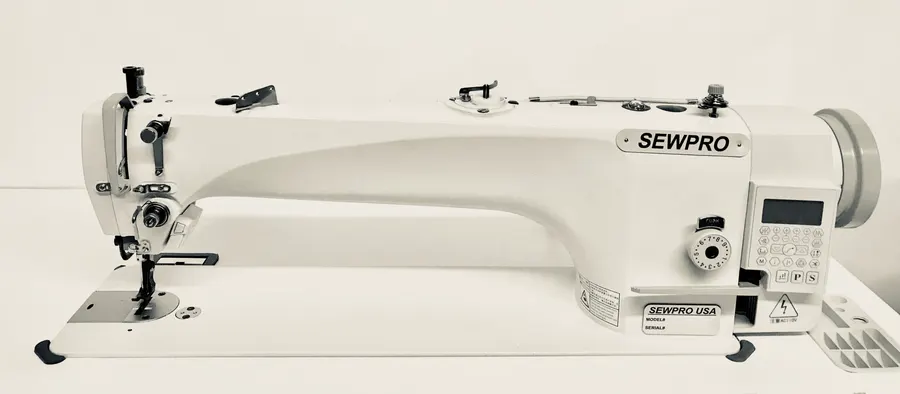 SEWPRO 0617DL-18-7Long-Arm Walking Foot Lockstitch for Upholstery and Marine Canvas
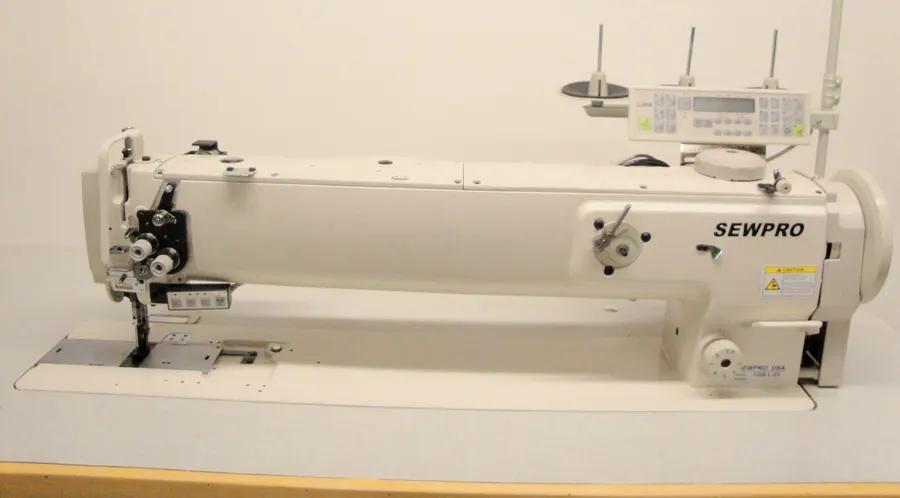 SEWPRO 1510L-25-725" Long-Arm Walking Foot Lockstitch for Upholstery and Leather
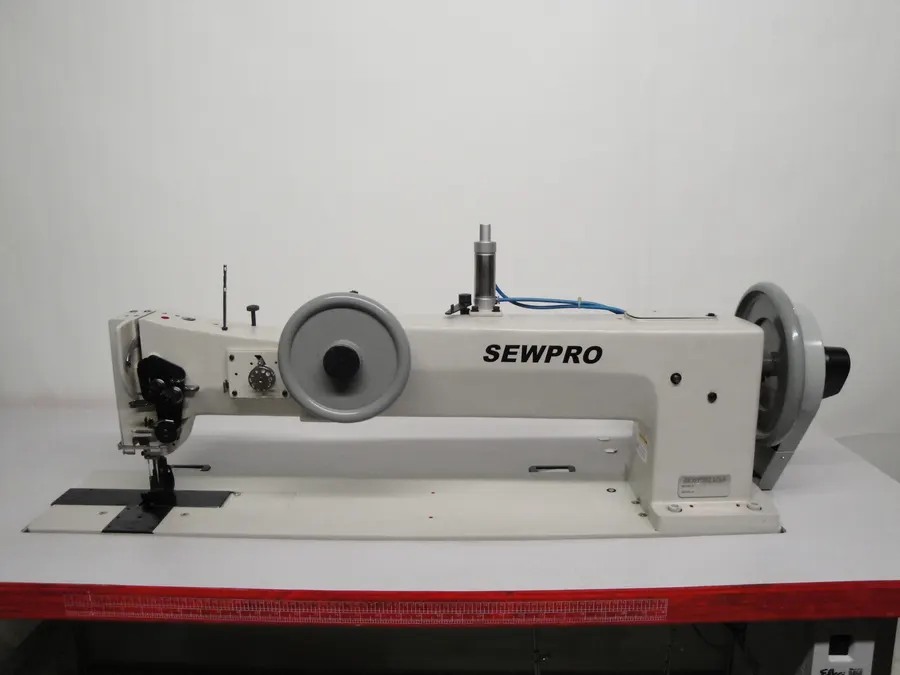 SEWPRO 8BL-30-230" Long-Arm Extra Heavy-Duty Double Needle Lockstitch Machine
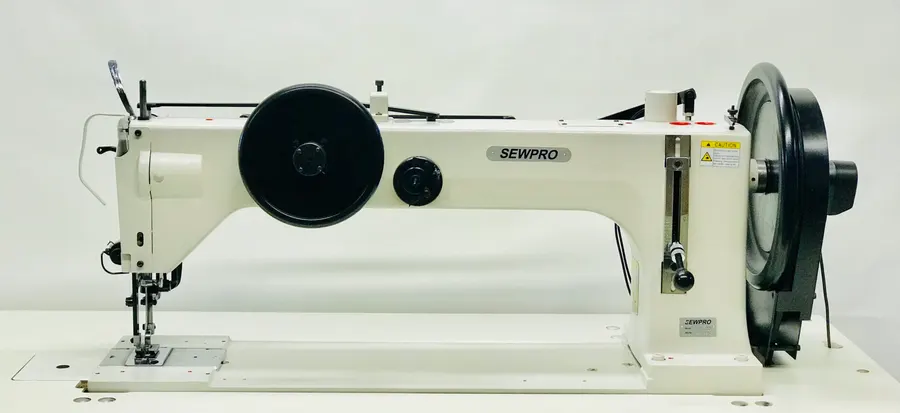 SEWPRO 733-3030" long arm extra heavy-duty lockstitch machine
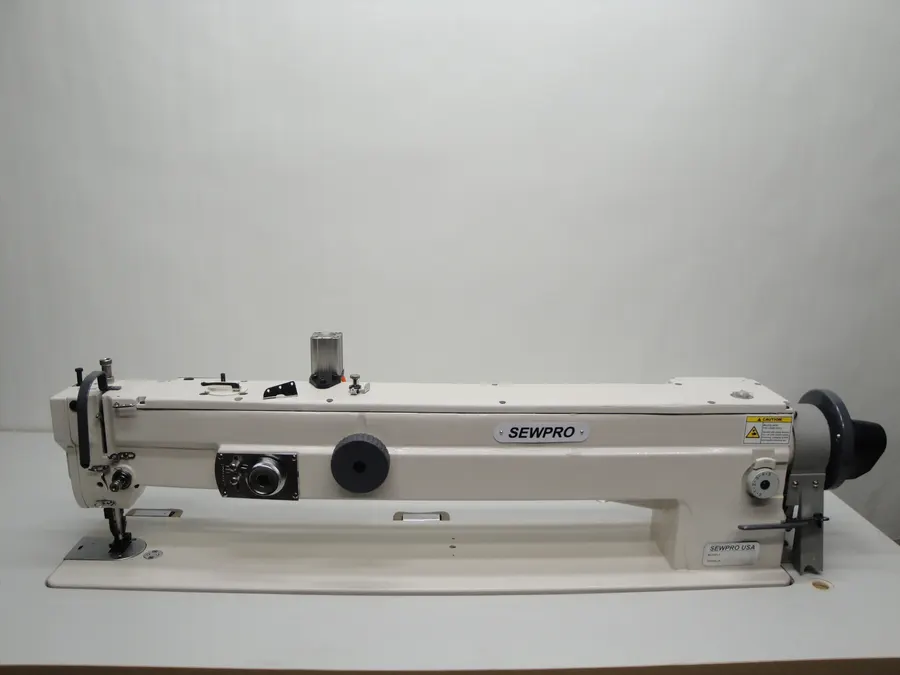 SEWPRO 2153L3030" long arm walking foot zig-zag machine
Talk to us
Not sure 18 inches is enough, or whether you need a long arm at all? Measure your widest regular piece and call. The answer takes two minutes.