
BioThane is the coated webbing that dog collar, leash and horse tack makers love: waterproof, easy to clean, made in Ohio in dozens of colors. It is also tough to sew. The coating grips the foot, the core resists the needle, and loose stitches on the back are the most common complaint. This guide is the setup Sergey shows customers in our shop and in his BioThane videos: needle, thread, stitch length, tension and technique, and which machine for which volume.
What makes BioThane hard to sew
BioThane is polyester webbing coated in a flexible plastic. Two things follow from that. The coating is grippy and springy, so it drags under the foot and tends to lift with the needle. And inside the coating there are fibers, so the needle has to pass between them without cutting them. Get those two right and BioThane sews cleanly; get them wrong and you see skipped stitches, loose stitches on the back and a weak seam.
There are several versions. Beta, the softer, leather-feel version, is the easier one to sew. The stiffer coated grades are much tougher and are where the setup matters most.
Needle: round point, not leather point
This is the mistake we see most. BioThane looks and feels like leather, so people reach for a leather point needle. But a leather point is a blade, and inside BioThane is woven webbing: a cutting point cuts the fibers and weakens the seam. Use a round point needle. On a 441 class machine with 207 thread we use a Schmetz size 200 round point.
Thread and stitch length
| Top thread | 207 bonded polyester or nylon on heavy machines; 138 on a standard walking foot |
|---|---|
| Bobbin thread | 138, one or two sizes lighter than the top |
| Needle | Round point. Schmetz size 200 with 207 thread on a 441 class |
| Stitch length | 5 to 7 stitches per inch |
| Ends | Back-tack at the start and the end of every seam |
You do not need the thickest thread to make a strong seam. With 5 to 7 stitches per inch and the ends back-tacked, 207 on top and 138 in the bobbin holds up, and the lighter bobbin thread pulls up into the material more easily.
Technique
Starting the seam
Pull both threads to the side and hold the top thread as you take the first stitches, so it does not pull back into the needle. On very tough material you may need to help the first stitch through; after that the feed takes it.
Corners without a skipped stitch
Skipping the stitch at a corner is the most common mistake on collars. The fix: before you pivot, bring the needle all the way down and let it start to come back up, a quarter to halfway, with the needle still in the material. Then lift the foot and turn. That way the corner stitch is already locked before you turn, and you will not lose it. A needle positioning motor does the stopping for you.
Back-tacking
Slow down before you reverse. At speed, reversing in tough BioThane breaks thread easily.
Finishing
Turn the handwheel until the take-up lever is at the very top, then back a touch so the needle is out of the way. Lift the foot, which releases the tension, and pull the work out.
Fixing loose stitches on the back
On BioThane the back of the seam is the hard part: the stitches have to pull up into the coating. If they look loose underneath:
- Tighten the top tension a little at a time until the back stitch pulls up clean.
- Increase the presser foot pressure. If the material lifts with the needle, the stitch cannot form tight. Loosen the lock nut on top of the presser bar screw, turn the screw down to add pressure, and lock it again.
- Check the needle is round point and the right size for the thread, and that the bobbin thread is lighter than the top.
Which machine
Starting out: a compound feed walking foot
For a new collar and leash business, the 1541S is our entry-level setup: walking foot with adjustable foot height, large M bobbin, reverse, and a 550W servo with an adjustable top speed. It sews up to three layers of BioThane with 46 to 138 thread.
A step up: needle positioning and a heavier head
The 1508NH looks similar but is a heavier machine, and we pair it with the 1100W needle positioning servo. Each touch of the pedal can move the needle one stitch and stop needle down, which makes corners on a collar almost automatic, and a heel back on the pedal brings the needle up to remove the work. On the controller you set the starting speed (Sergey runs 180) and the top speed (1,500, and it goes down to 500). An automatic foot lift can be added. Either machine can take this motor; it is the upgrade that saves the most handwork.
Heavy tack and harness: the 441
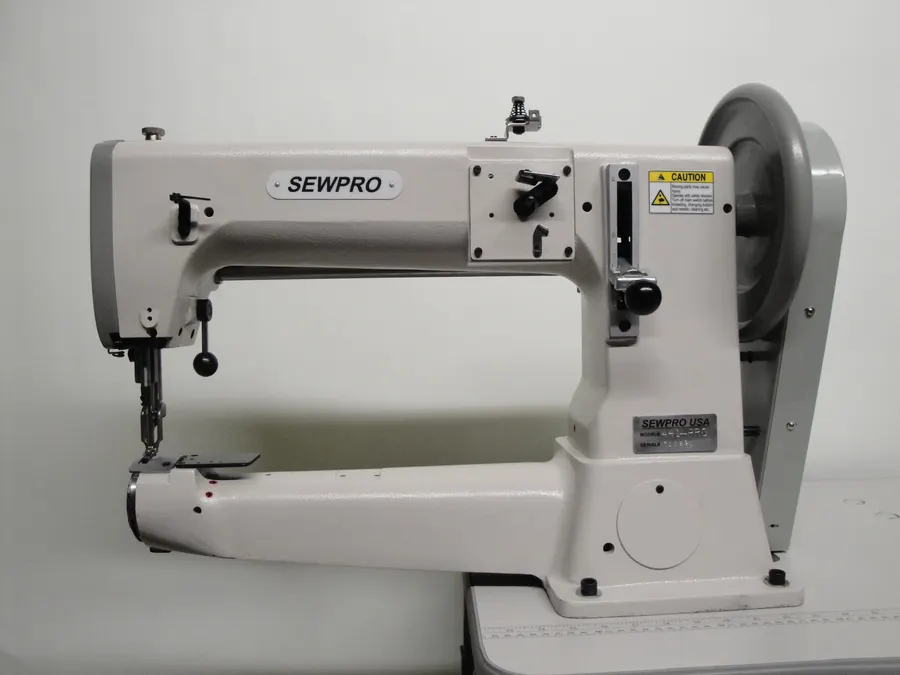
For thick, stiff BioThane, harness, horse tack and several layers with hardware, the 441-PRO cylinder arm. With the 1100W high torque servo it runs very slowly with full force, without a speed reducer, and the cylinder arm reaches around buckles and D-rings. A roller guide comes standard.
Production: a pattern sewer
When the same collar, strap end or belt is made hundreds of times, a programmable pattern sewer sews it identically every time from a clamp. The PSM-1306CH has a 5 to 1 motor ratio that gives it the punch for three layers of tough BioThane; slow it down for that work, because the material expands as it is sewn. We build custom clamps for specific products, such as belts sewn in two positions on a heavier pattern sewer.
Questions people ask
What needle should I use for BioThane?
A round point needle, not a leather point. BioThane has woven webbing inside, and a cutting point cuts the fibers. With 207 thread on a 441 class machine we use a Schmetz size 200 round point.
What thread is best for BioThane?
Bonded polyester or nylon: 207 on top and 138 in the bobbin on heavy machines, or 138 on a standard walking foot. With 5 to 7 stitches per inch and back-tacked ends, that is plenty strong.
Why are my stitches loose on the back of BioThane?
Tighten the top tension a little, and increase presser foot pressure so the material does not lift with the needle. Also check the needle is round point and the bobbin thread is lighter than the top.
Can a home sewing machine sew BioThane?
Not reliably beyond a single thin layer. Collars and leashes need a walking foot industrial machine with a large bobbin and a servo motor; tack and harness need a 441 class.
BioThane and Beta are trademarks of BioThane Coated Webbing Corp. SEWPRO does not sell BioThane; we sell and set up the machines our customers sew it on.
Machines in this article
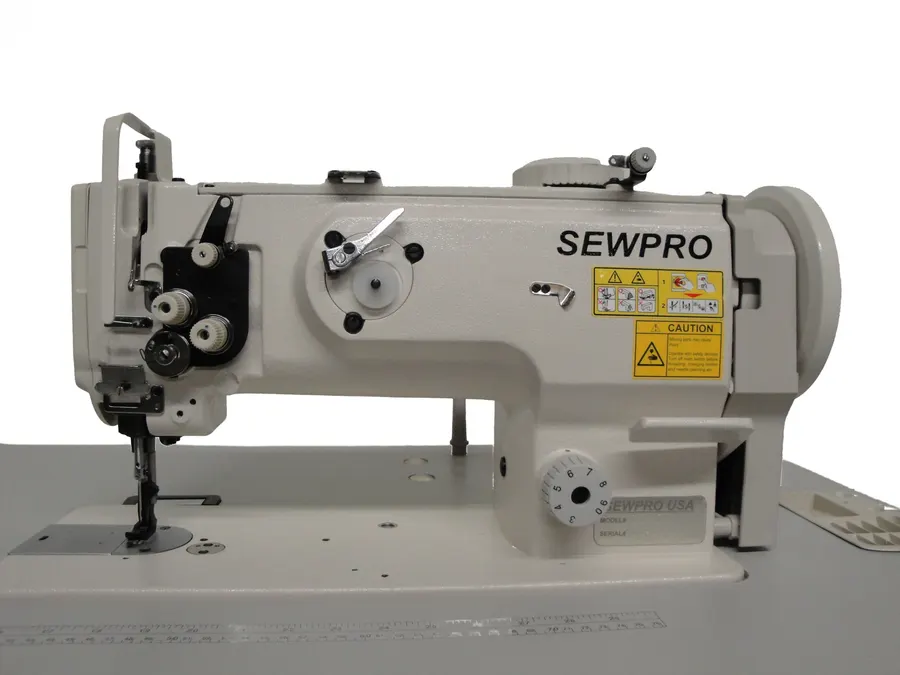 SEWPRO 1541SHeavy-Duty Walking Foot Lockstitch Sewing Machine
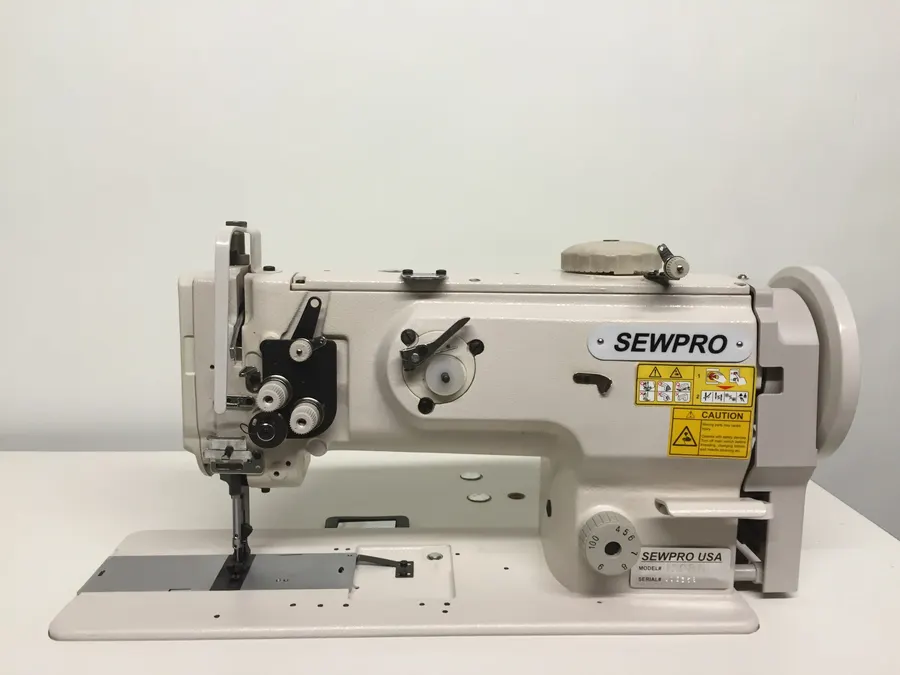 SEWPRO 1508NHUnison-Feed Lockstitch for Extra Heavy-Weight Materials
- SEWPRO 441-PRO441 class cylinder arm walking foot for extra heavy leather
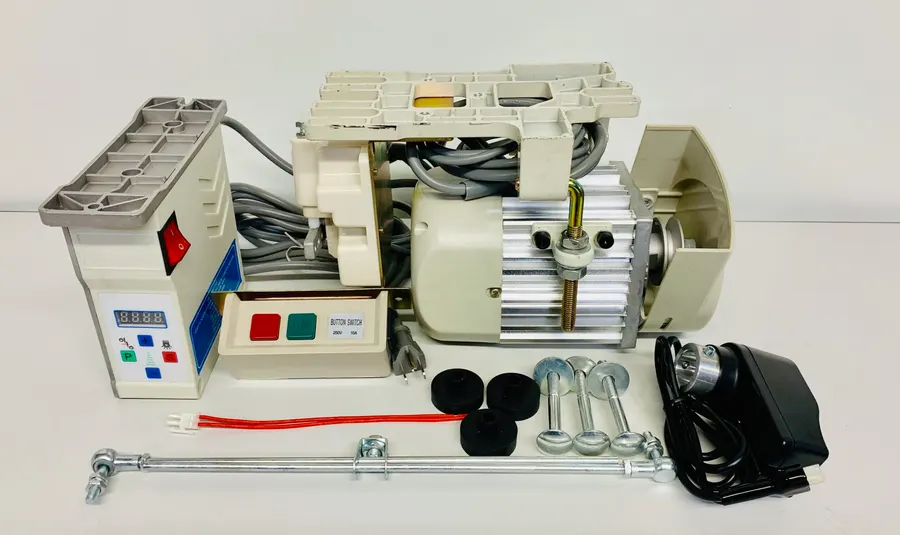 SEWPRO SP-1100 NPFLNeedle positioning servo motor with optional automatic foot lift
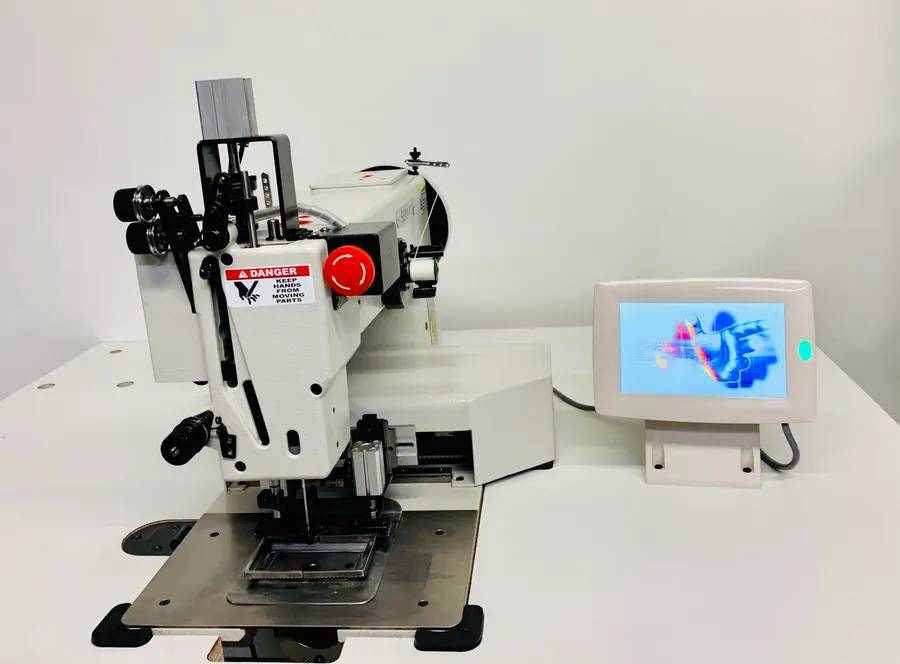 SEWPRO PSM-1306CHExtra Heavy-Duty Programmable Sewing Machine (130x60mm)
Talk to us
Send us a piece of the BioThane you use and tell us what you make. We will set up the machine on it and send you the sample.