
Half the stitching problems we see on heavy machines come down to a needle that does not match the thread. This page is the chart we use in the shop: thread sizes from 46 to 554, the needle size for each, the needle systems our machines take, and which point to use on which material.
How heavy thread is sized
Bonded nylon and polyester thread for industrial machines is sold in commercial sizes, sometimes written with a V in front: 46, 69, 92, 138, 207, 277, 346, 415 and 554. The number is roughly the weight in denier divided by ten, so a bigger number is a heavier thread. Some suppliers label the same threads in Tex, which is grams per kilometer. The two systems line up closely:
| 46 (Tex 45) | Light upholstery, garments, quilting. The heaviest most home machines will run. |
|---|---|
| 69 (Tex 70) | Upholstery, bags, wallets, light canvas. The most common size in an upholstery shop. |
| 92 (Tex 90) | Marine canvas, awnings, heavier upholstery, small leather goods. |
| 138 (Tex 135) | Auto upholstery topstitching, belts, bags, heavy canvas, webbing. |
| 207 (Tex 210) | Holsters, heavy belts, harness, tie-down straps, decorative topstitch. |
| 277 (Tex 270) | Holsters, saddlery, lifting slings, heavy webbing. |
| 346 (Tex 350) | Saddlery, harness, heavy leather, cargo straps. |
| 415 (Tex 400) | Saddles, heavy harness, industrial straps. |
| 554 (Tex 600) | Cargo nets, parachute risers, fall protection, belting. 733 class only. |
The needle for each thread size
The needle eye and the groove down the front of the needle have to be large enough for the thread to run freely. Too small and the thread frays, breaks and skips stitches. Too large and the holes are bigger than they need to be, which shows on leather and weakens webbing. These are the sizes we start with; go one size up for very dense material or coated thread.
| 46 | Nm 90 to 100 (14 to 16) |
|---|---|
| 69 | Nm 100 to 110 (16 to 18) |
| 92 | Nm 110 to 125 (18 to 20) |
| 138 | Nm 125 to 140 (20 to 22) |
| 207 | Nm 140 to 160 (22 to 23) |
| 277 | Nm 160 to 180 (23 to 24) |
| 346 | Nm 180 to 200 |
| 415 | Nm 200 to 230 |
| 554 | Nm 250 to 330, system 1000H |
The bobbin can run the same thread as the top or one size lighter. Many leather shops run 277 on top and 207 in the bobbin: the stitch looks the same from the front and the bobbin lasts longer.
Needle systems: which needle fits which machine
A needle system is the shape and length of the needle: shank, overall length and where the eye sits. A machine is built for one system, and the wrong one will not form a stitch even if it fits in the clamp. These are the systems our machines take:
| 135x17 (DPx17) | Walking foot and compound feed flatbeds and long arms: 1541S, 1508NH, 0617D-7, 1508L-18, 1710D. Thread 46 to 138. |
|---|---|
| 135x16 (DPx16) | The leather point version of 135x17, for the same machines. |
| 134-35 (DPx35) | A longer needle for heavier work on some walking foot and cylinder machines, such as the ERGOSEW 867 and 335-GA. |
| 190R | High arm long arms such as the 1508L-18H. |
| 794 (7x23) | 441 class cylinder arms and the 204 and 205 extra heavy machines. Thread 138 to 415, sizes 140 to 250. |
| 1000H | The 733 class. Thread 138 to 554, sizes 250 to 330. The heaviest system made. |
Each product page on this site lists the needle system and size range in its technical data. If you have an older machine and do not know its system, send a photo of the needle with its package or the model plate and we will tell you.
Points: round, ball and leather
- Round point (R). Woven fabric, canvas, vinyl, most upholstery. It pushes the threads aside instead of cutting them.
- Light ball point (SES) and medium ball (SUK). Webbing, knits and elastic, where a sharp point would cut the fibers and weaken the strap.
- Leather points (LR, S, D). They cut a small slit instead of piercing. LR gives the slanted stitch associated with fine leather work; S is a narrow cross point; D is a triangular point that cuts the cleanest hole in thick, hard leather.
Never use a leather point on fabric or webbing: it cuts the fibers and the seam fails early. Never use a round point on thick leather: the hole closes around the thread and the stitch looks uneven.
Signs the needle and thread do not match
- Thread frays or breaks at the needle eye after a few inches.
- Skipped stitches, especially on thick seams or crossing a hem.
- Loops on the bottom even though the tension seems right.
- The needle deflects and hits the plate or the foot, or bends on heavy seams.
- Holes that look too big for the thread on leather, or a seam that pulls out of webbing.
If changing the needle does not fix it, the cause is probably mechanical. Our troubleshooting guide goes through the rest in order.
Questions people ask
What size needle for 138 thread?
Nm 125 to 140, which is US size 20 to 22. On a walking foot flatbed that is a 135x17 needle; use 140 for dense layers or coated thread.
What size needle for 277 thread?
Nm 160 to 180, in system 794 on a 441 class or 204/205 class machine. A home or standard walking foot machine cannot run 277 thread.
Is 135x17 the same as DPx17?
Yes. They are two names for the same needle system. 135x16 is the same needle with a leather point.
Can I use thicker thread in the bobbin than on top?
It is usually the other way around: the same size or one size lighter in the bobbin. A heavier bobbin thread is hard to balance and fills the bobbin case quickly.
Machines in this article
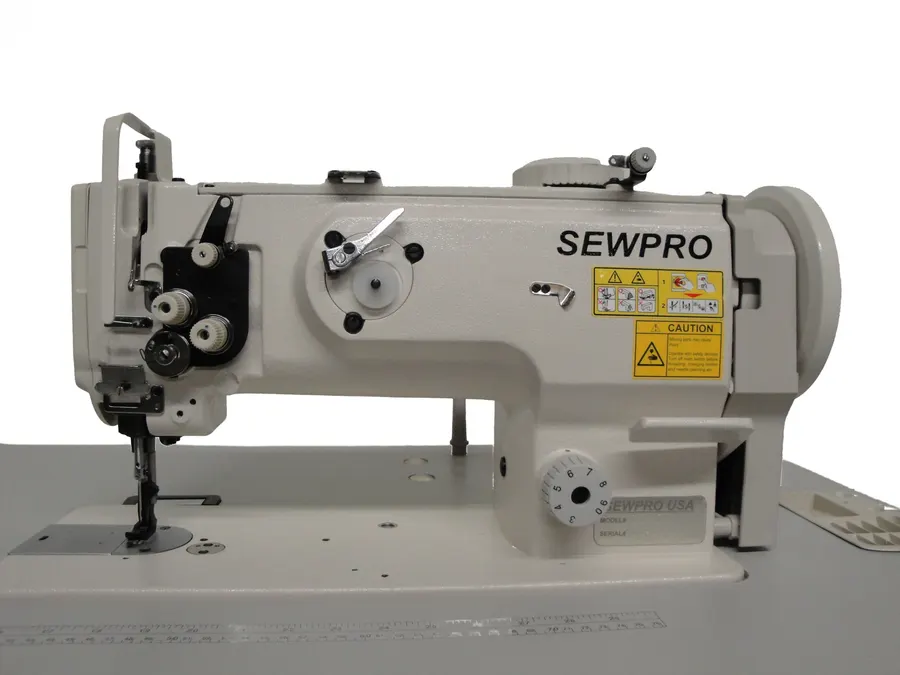 SEWPRO 1541SHeavy-Duty Walking Foot Lockstitch Sewing Machine
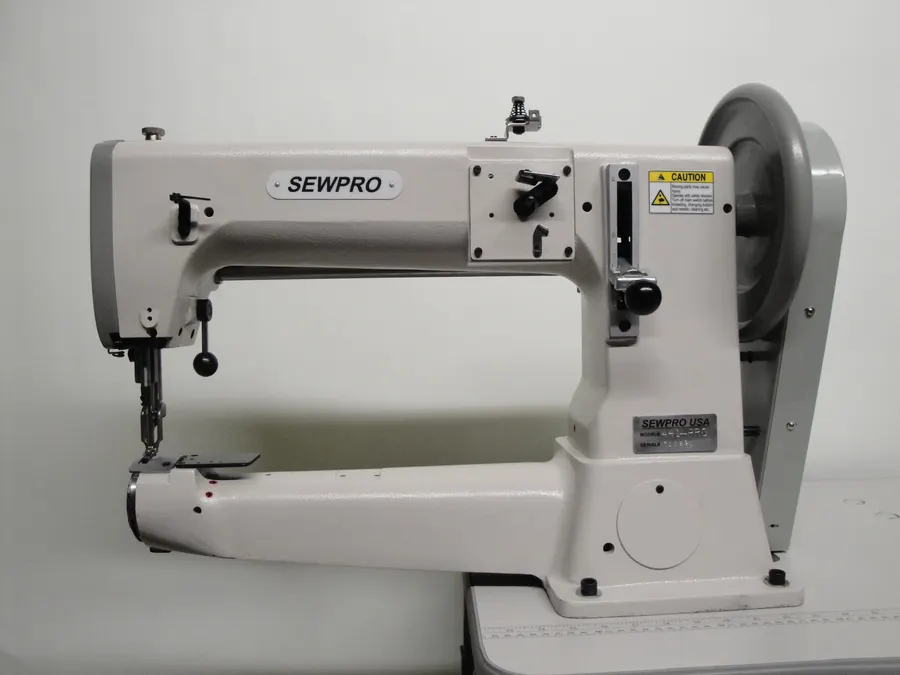 SEWPRO 441-PRO441 class cylinder arm walking foot for extra heavy leather
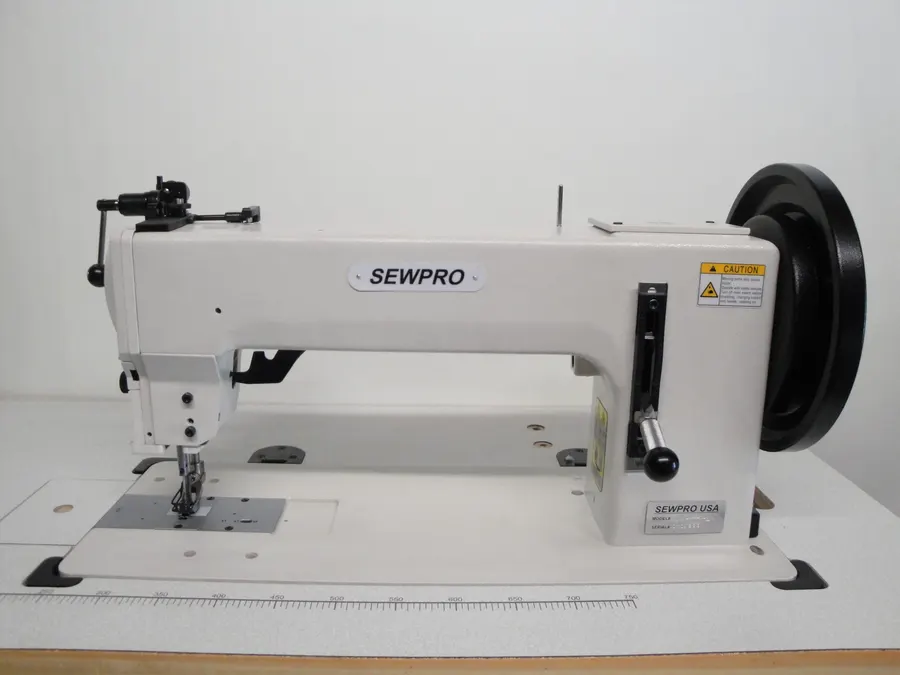 SEWPRO 204-420Barrel Shuttle Lockstitch for Extra Heavy-Weight Sewing
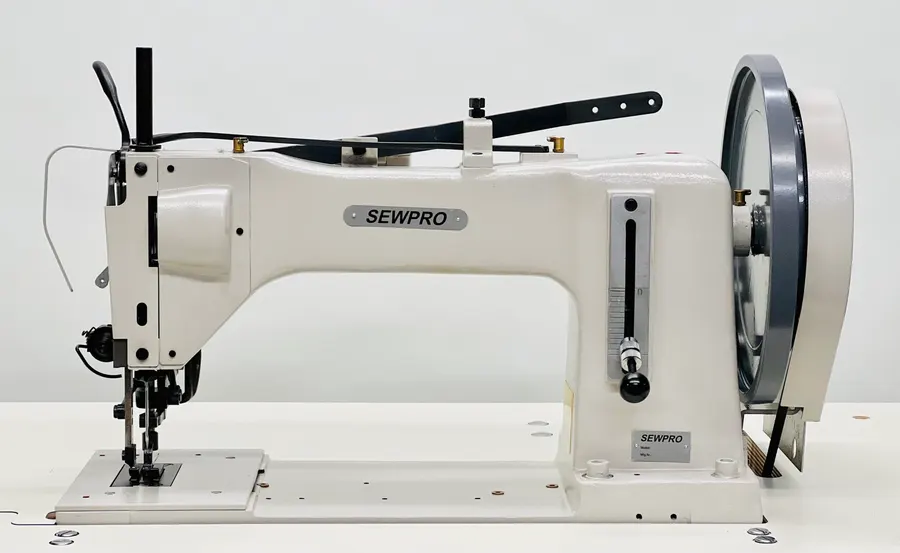 SEWPRO 733-PROExtra Heavy-Duty Lockstitch Sewing Machine
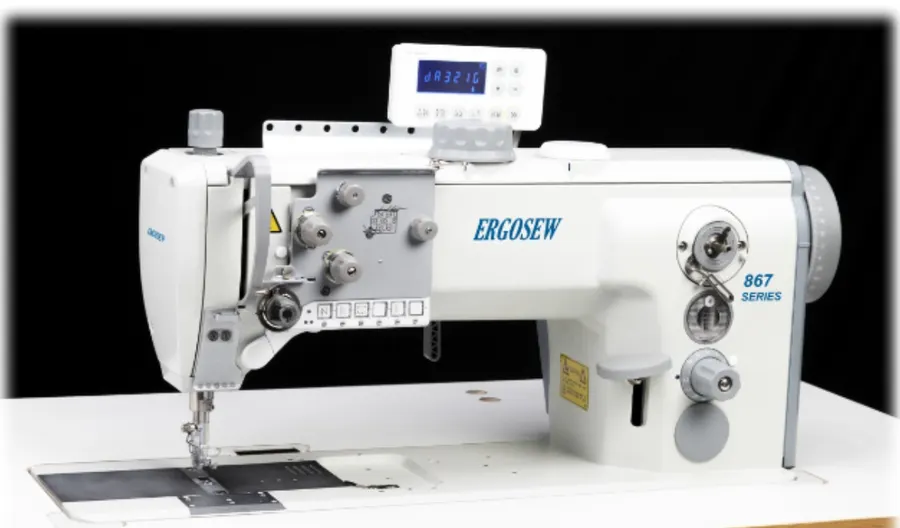 ERGOSEW 867 seriesMedium-Heavy Triple Feed Lockstitch Sewing Machine
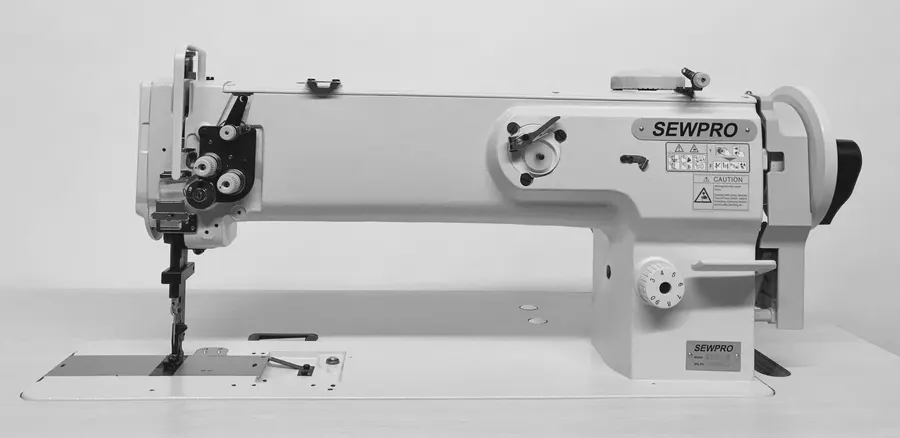 SEWPRO 1508L-18HHigh-Arm Long-Arm Walking Foot Lockstitch Machine
Talk to us
Tell us your machine, your material and the thread you want to run. We will send the needle system, size and point, and ship a box the same day.