
A straight lockstitch is the strongest seam for most work and the wrong seam for some. Sails, wetsuits, parachute harness, nets and anything else that stretches or flexes hard along the seam will tear at the stitch line if the thread cannot give. Zig-zag is how the trade solves that, and when the piece is also large, you need a zig-zag machine with a long arm. This guide covers why zig-zag, what bite width and arm length mean for real work, and where a machine like the 2153L30 fits.
Why some seams must be zig-zag
A straight lockstitch locks the thread tight at every stitch in a straight line. When the material along that line is pulled, the thread has no slack to give and the load concentrates at the needle holes. In woven sailcloth the fabric tears along the perforations like a postage stamp. In neoprene the thread cuts through the foam. In webbing a straight seam is fine because webbing does not stretch much, but in a knitted harness or a net it is a weak point.
A zig-zag seam lays the thread in a sawtooth across the join. Pull along the seam and the sawtooth straightens a little before the thread takes the load, spreading it across the fabric instead of concentrating it. Pull across the seam and the two layers are held by thread that crosses the join at an angle, with many more fibers engaged than a straight seam catches. That is why sailmakers have used zig-zag since the first machine-sewn sails, and why a three-step zig-zag is specified for parachute harness and some fall protection.
Bite width
The bite is how far the needle swings side to side, which sets the width of the zig-zag. Domestic machines manage 5 or 6mm. Industrial zig-zags run 9 to 12mm, and that extra width is not decorative: on heavy sailcloth a 10mm two-step zig-zag with 92 thread is the standard seam, because it engages enough fabric either side of the join to carry the load. Narrower bites are used for lighter cloth and for the second row of a two-row seam.
Two-step and three-step zig-zag refer to how many stitches the needle takes going across: a plain zig-zag goes edge to edge in one stitch; a three-step takes three small stitches across each leg of the sawtooth, which holds knits and nets better and is the parachute and harness standard.
Arm length and why it matters here
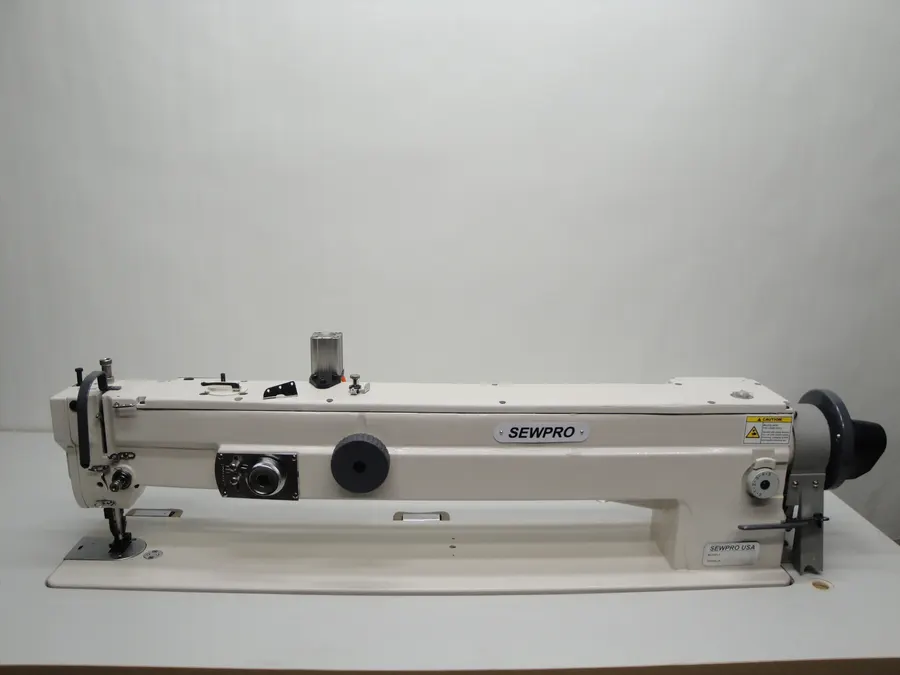
A sail panel seam is long and sits with most of the sail to the right of the needle. Boat covers, awnings and large nets are the same. On a 10 inch throat the operator rolls the material and fights the roll through every seam. A 30 inch arm lets most sails simply slide through. The 2153L30 combines that 30 inch reach with the wide bite, so one machine does the full-size work. See our guide to long arm machines for how to choose an arm length by measuring your work.
The feed system
Sailcloth is slippery and stiff, neoprene is grippy and stretchy, coated fabric is both, and on all of them a plain drop feed lets the top layer creep. Industrial zig-zags for this work have either compound (walking foot) feed or top and bottom feed, where a driven foot above matches the feed dog below. Both keep two layers of a long seam the same length. The 2153L30 is compound feed; the 2156 and 2522D are top and bottom feed on a feed-off-the-arm bed for tubular neoprene.
Zig-zag machines by job
| Sail panels, large covers, awnings | Long arm compound feed zig-zag, 25 to 30 in arm, 9 to 12mm bite: 2153L30 |
|---|---|
| Sail repair, small lofts, upholstery zig-zag | Flatbed heavy zig-zag with walking foot, standard arm: 266, 146RB |
| Wetsuits, neoprene, rubber-coated tubes | Feed-off-the-arm top and bottom feed zig-zag: 2156, 2522D |
| Nets, harness, webbing joins | Heavy flatbed zig-zag with large hook and 2 or 3 step pattern: 2150-CBZ, 2530-7C |
| Decorative zig-zag on leather and upholstery | Walking foot zig-zag with adjustable bite: 204-104A, 204ZTS |
Where the 2153L30 fits
It is the machine for a loft or a canvas shop that makes or repairs full-size sails and large covers and wants one head to do both the zig-zag and the straight work. Set the bite to zero and it is a 30 inch compound feed straight stitch machine for cover seams and hems. Set it to 9 or 10mm and it is a sail machine. The large hook holds enough 92 or 138 thread for a long panel seam, and the compound feed keeps Dacron and acrylic moving without creep.
It is not the machine for a shop that mostly sews small things. A 30 inch head on a six foot table is a commitment of floor space, and the arm length does nothing for a bag or a cushion. For a small loft doing repairs and small sails, a flatbed heavy zig-zag like the 266 on a standard table does the same seam in less space.
Setting up a heavy zig-zag
Needle. Zig-zag needles deflect more than straight stitch needles because the needle bar swings. Use a fresh, correct size needle: 120 to 140 for 92 thread in sailcloth, 160 for 138 in heavy cloth. Schmetz round point for cloth and coated fabric.
Thread. Bonded polyester for anything outdoors; UV eats nylon. V-92 is the sail standard, V-138 for heavy cloth and covers. PTFE thread for the longest outdoor life, with tension set carefully because it is slippery.
Stitch length and bite. Sail seams are typically 6 to 8 stitches per inch with a 9 to 10mm bite. Wider bites need a slightly longer stitch to avoid a sawtooth that is nearly solid thread.
Tension. A zig-zag stitch shows its knot more readily than a straight stitch. Balance it so the knot lands inside the cloth; a balanced zig-zag looks identical from both sides.
Seam allowance and basting. Sail panels are stuck with seam tape before sewing so the overlap does not shift. Do the same with large covers; the compound feed handles creep, but the tape handles alignment.
Two-row seams
Standard practice on sails and heavy covers is two parallel rows of zig-zag along the overlap, one near each edge, so if one row chafes through the seam holds. A long arm makes the second row easy because the panel is already positioned; on a short arm it is twice the fight. On wide overlaps a third row down the middle is added.
Questions people ask
Can a zig-zag machine sew a straight stitch?
Yes. Set the bite to zero. The 2153L30 and the 266 are both used as straight stitch walking foot machines when they are not sewing sails.
What bite width do I need for sails?
9 to 10mm for cruising sails in Dacron, with two rows. Lighter nylon spinnakers use a narrower bite and lighter thread.
Why is a three-step zig-zag used on harness?
Three small stitches across each leg hold a knit or a net without cutting it and spread the load further. It is specified in several harness and fall protection standards.
Do I need a long arm for sail repair?
Usually not. Repairs are local; you work at the damaged spot with the rest of the sail bunched to the side. A standard flatbed heavy zig-zag handles repairs; the long arm is for making sails.
Machines in this article
- SEWPRO 2153L3030" long arm walking foot zig-zag machine
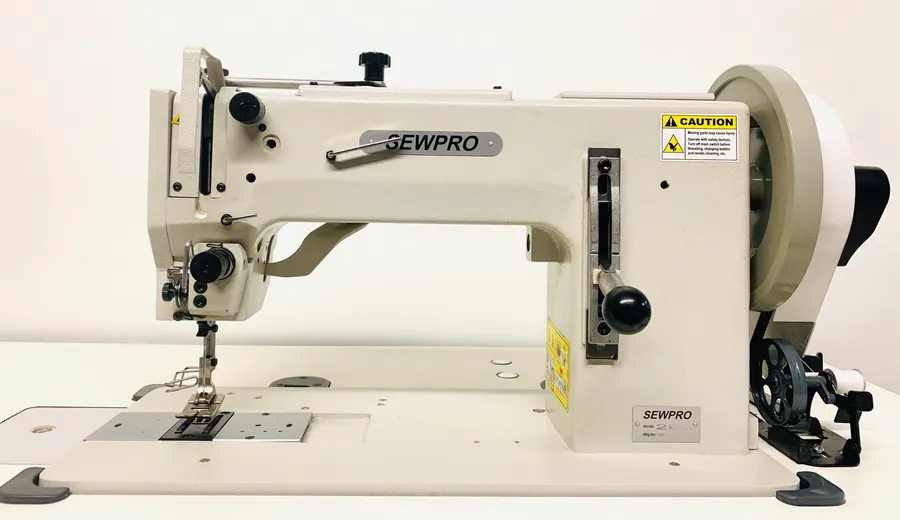 SEWPRO 266Heavy-duty walking foot zig-zag sewing machine
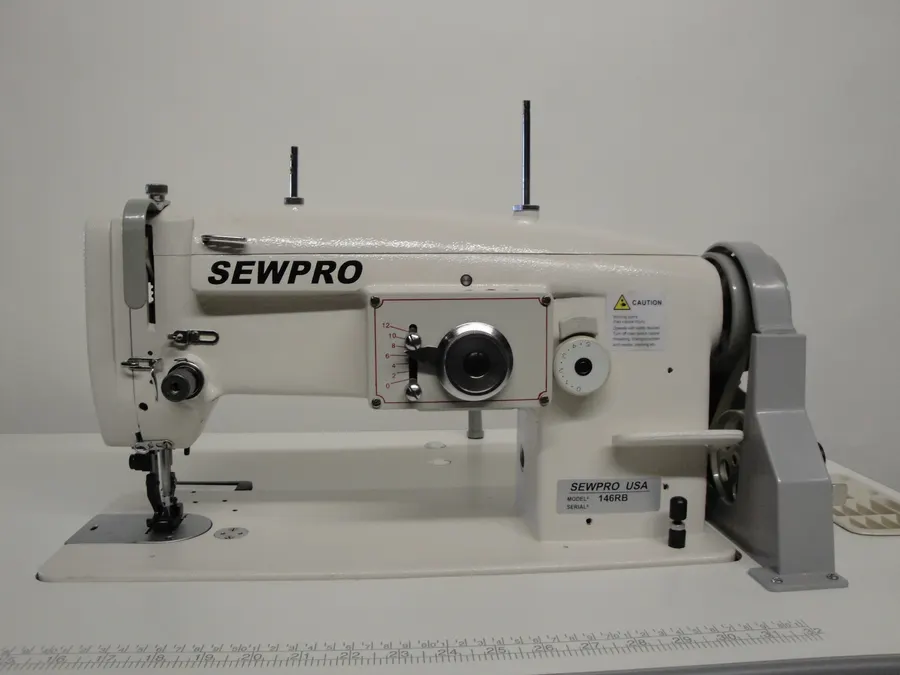 SEWPRO 146RBWalking foot zig-zag lockstitch machine with large bobbin
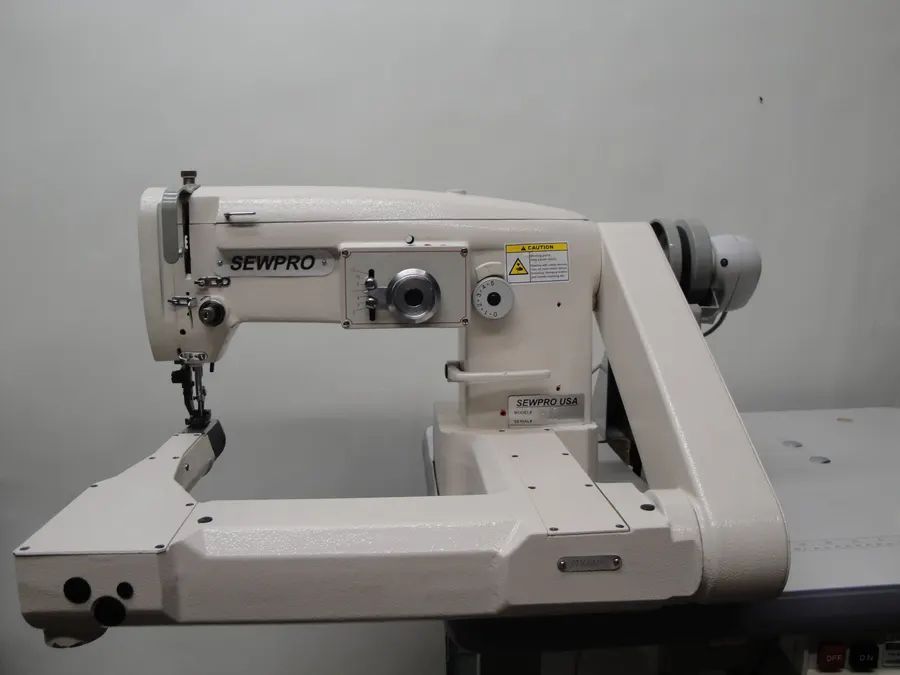 SEWPRO 2156Feed-off-the-arm top and bottom feed zig-zag machine
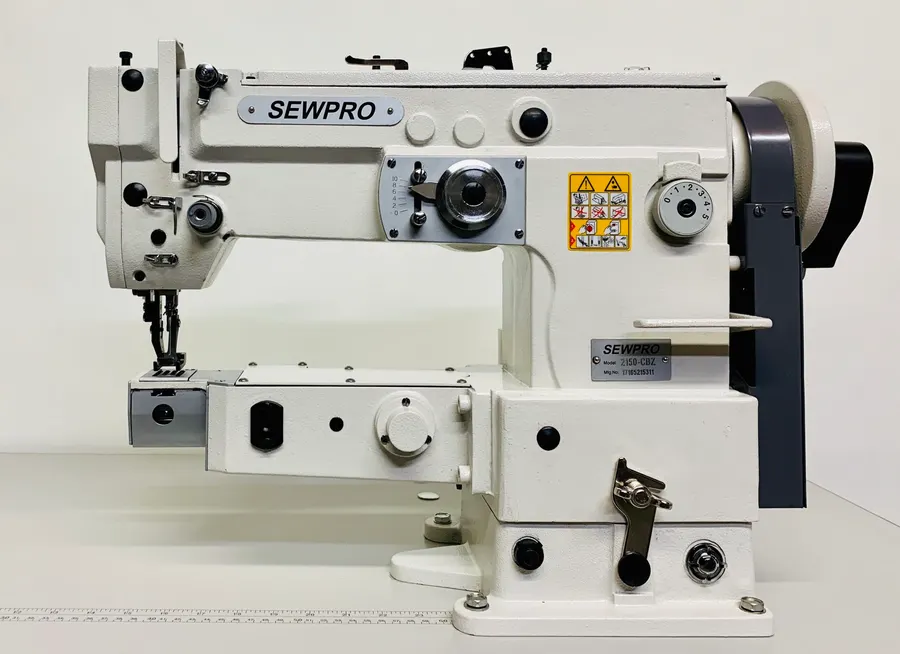 SEWPRO 2150-CBZHeavy-duty zig-zag lockstitch with large bobbin
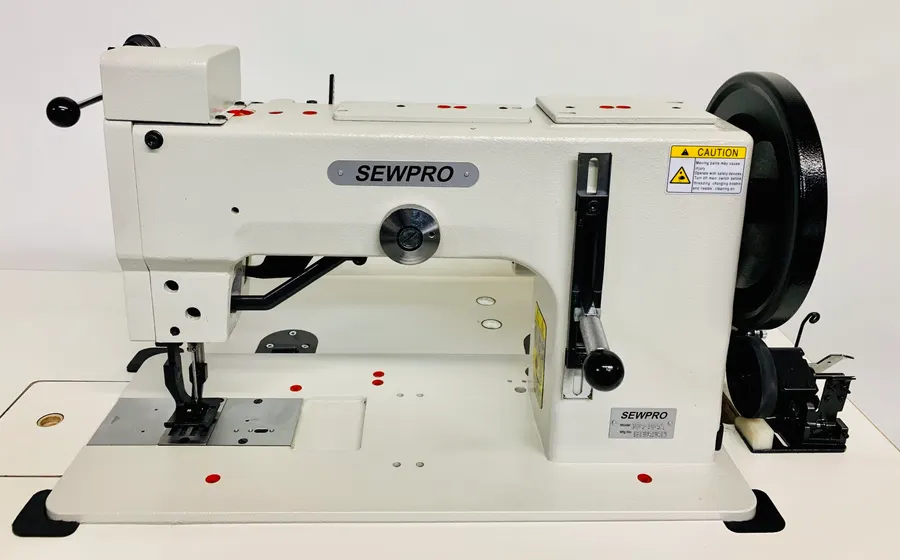 SEWPRO 204-104AWalking foot zig-zag for sails, upholstery and leather
Talk to us
Making sails, covers or nets? Tell us the cloth, the thread and the size of the biggest piece. We will say whether you need 30 inches or a flatbed zig-zag.