
If you have an older industrial machine that hums the moment you switch it on and jumps forward when you touch the pedal, it has a clutch motor. Replacing it with a servo motor is the single best upgrade you can make to that machine. Here is what the difference is, why it matters most on heavy work, and what to know before you convert.
How a clutch motor works
A clutch motor is an AC induction motor that spins at full speed, usually 1,725 or 3,450 RPM, the whole time it is switched on. The pedal pushes a friction plate against the spinning flywheel, and the machine runs. Let the pedal up and a brake pad stops the machine while the motor keeps spinning.
It is simple and nearly indestructible, which is why so many are still in use. It also has three problems: it is hard to sew slowly, because slow speed means slipping the clutch; it draws power and makes noise all day even when nobody is sewing; and the clutch and brake pads wear and need adjusting.
How a servo motor works
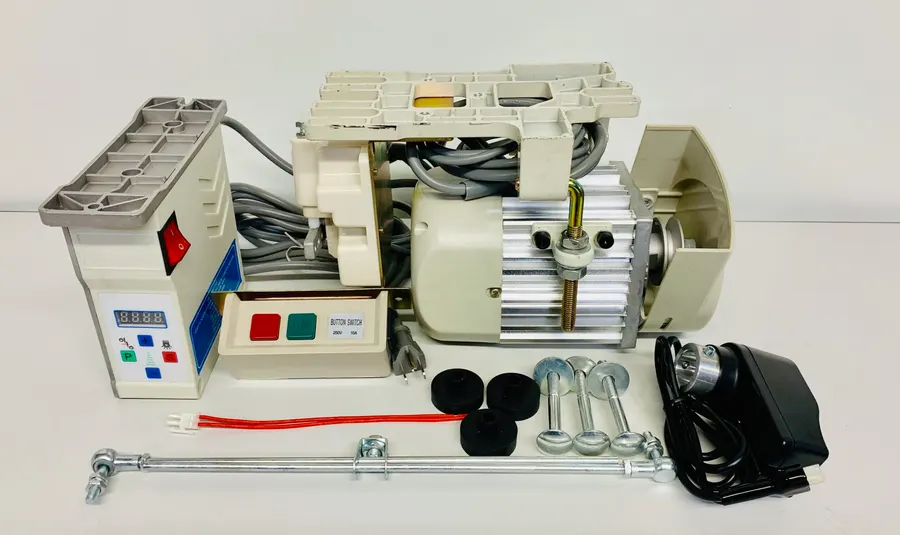
A servo motor is a brushless DC motor with an electronic controller. It does not turn until you press the pedal, and its speed follows the pedal smoothly from a crawl to full speed. A dial on the controller sets the top speed, so a new operator cannot run away with the machine. When you stop, it stops, and it is silent.
Many servos add a needle positioner: a sensor on the handwheel that stops the needle up or down every time. Needle down holds the work in place to pivot at a corner; needle up lets you pull the work out without turning the handwheel. The SP-1100 NPFL has it built in, along with an output for an automatic foot lift.
| Slow speed control | Clutch: poor, you slip the clutch. Servo: smooth from a few stitches a minute. |
|---|---|
| Noise | Clutch: hums all day once switched on. Servo: silent until you sew. |
| Power use | Clutch: runs continuously. Servo: draws power mainly while sewing. |
| Top speed | Clutch: fixed by the motor and pulley. Servo: set with a dial. |
| Needle positioning | Clutch: no. Servo: available on many models. |
| Maintenance | Clutch: clutch and brake pads wear. Servo: little beyond keeping it clean and dry. |
| Weight | Clutch: heavy. Servo: much lighter, easier to mount. |
Why it matters most on heavy work
On light fabric you sew fast and a clutch motor is merely annoying. On heavy leather, webbing and thick canvas you sew slowly: around a holster curve, over a buckle, along a binding. That is exactly where a clutch motor is worst. The servo gives you full control at one stitch at a time, and that is the difference between a clean seam and a crooked one.
Torque at low speed and the speed reducer
A servo is quiet and controllable, but at very low RPM a small motor has less force. For extra heavy machines, the 441 class, the 204 and 205 heads and the 733 class, we add a speed reducer: a pair of pulleys between motor and machine that trades top speed for force at the needle. The machine sews just as slowly but pierces a thick stack without stalling. Matching the motor and reducer to the head and the work is part of how we set up every heavy machine.
Direct drive: the next step
Many newer heads have the servo motor built onto the main shaft at the handwheel, with no belt at all. Machines such as the 0617D-7, 1710D and ERGOSEW 867 are direct drive, often with automatic thread trimming, back-tack and foot lift controlled by the same motor. For a new production machine that is usually the best choice. For an older head, a belt servo is the upgrade.
Converting your machine to a servo
We convert machines of every brand. If you do it yourself, check four things first:
- Mounting. Most servos bolt to the same three-bolt pattern under the table as a clutch motor. Check the clearance to the stand legs.
- Pulley. A smaller motor pulley gives more force and lower speed. Heavy work wants a small pulley or a speed reducer.
- Belt. A servo sits in a slightly different place, and new servos usually do not come with a belt. Measure for a new V-belt after mounting.
- Voltage. Most shop servos run on 110V household current. Some direct drive machines need 220V; check before ordering.
Questions people ask
Is a servo motor strong enough for heavy leather?
Yes, with the right setup. Use a high torque servo such as the SP-1100 NPFL and a speed reducer pulley on extra heavy machines like the 441 class. The reducer multiplies the force at low speed.
Can I put a servo motor on any industrial sewing machine?
Almost any belt-driven industrial head, of any brand. Most servos use the same under-table mounting as a clutch motor. You will need the right pulley and a new belt.
Does a servo motor save electricity?
Yes. A clutch motor runs the whole time it is switched on; a servo draws power mainly while you sew. In a shop with several machines the difference is noticeable.
What is a needle positioner?
A sensor that tells the servo where the needle is, so the machine always stops with the needle up or down as you choose. It makes pivoting at corners and removing the work much faster.
Machines in this article
- SEWPRO SP-1100 NPFLNeedle positioning servo motor with optional automatic foot lift
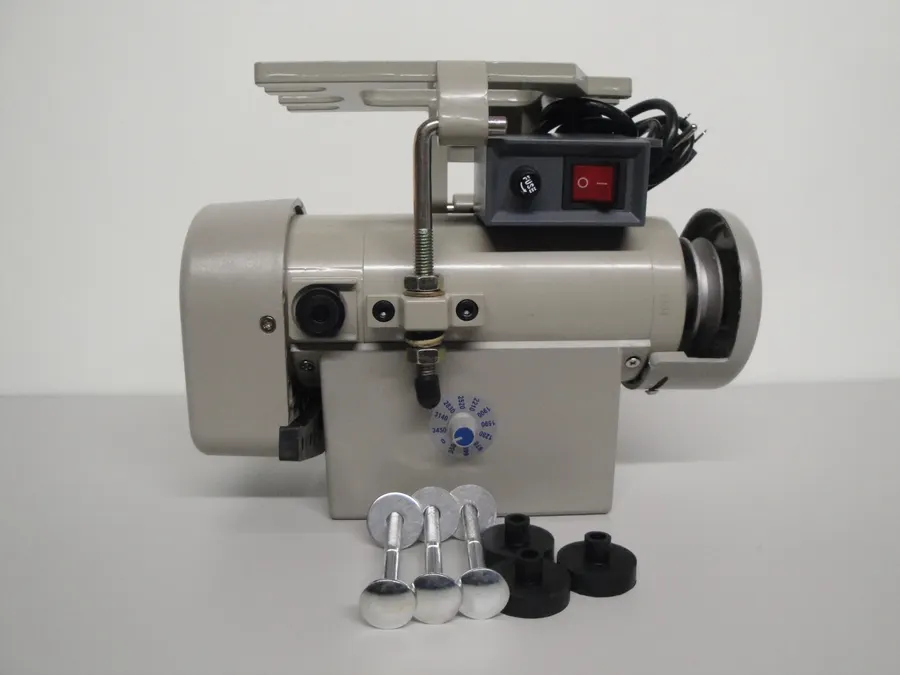 SEWPRO 550AEnergy-saving servo motor, 550W, 0 to 3600 RPM
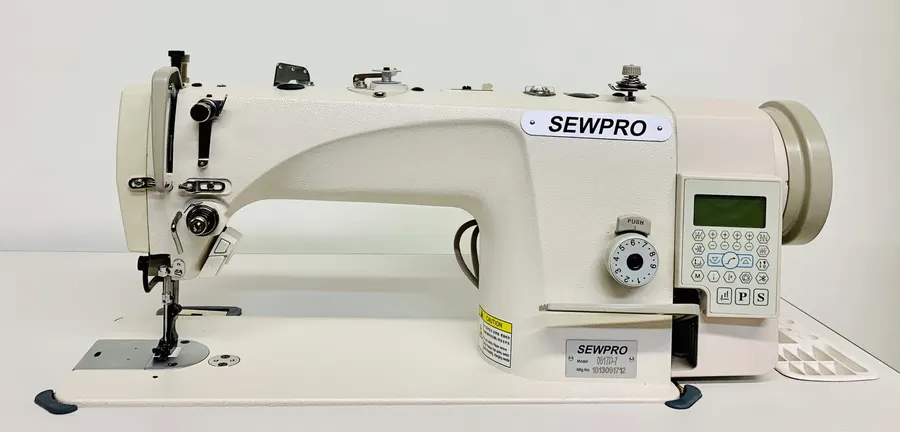 SEWPRO 0617D-7Walking Foot Lockstitch for Canvas and Upholstery
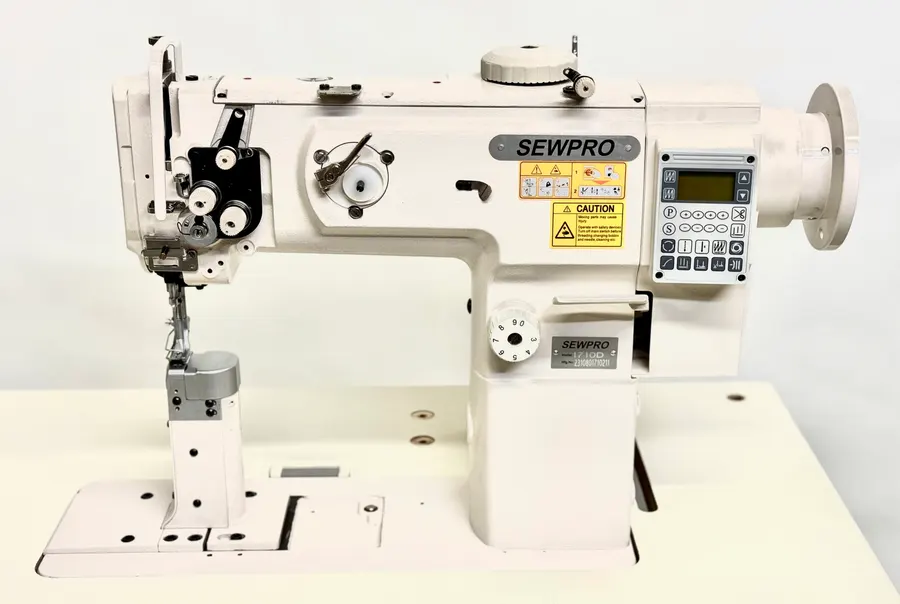 SEWPRO 1710DPost-Bed Lockstitch Sewing Machine with Direct Drive
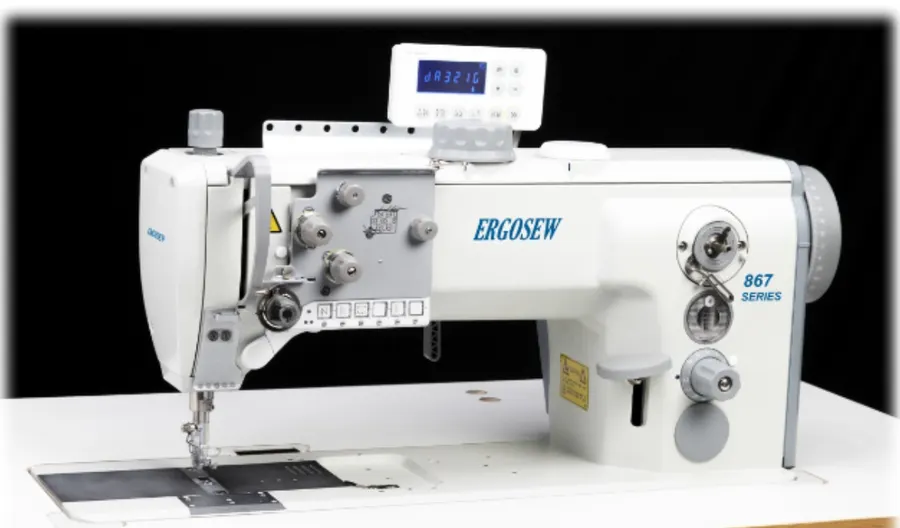 ERGOSEW 867 seriesMedium-Heavy Triple Feed Lockstitch Sewing Machine
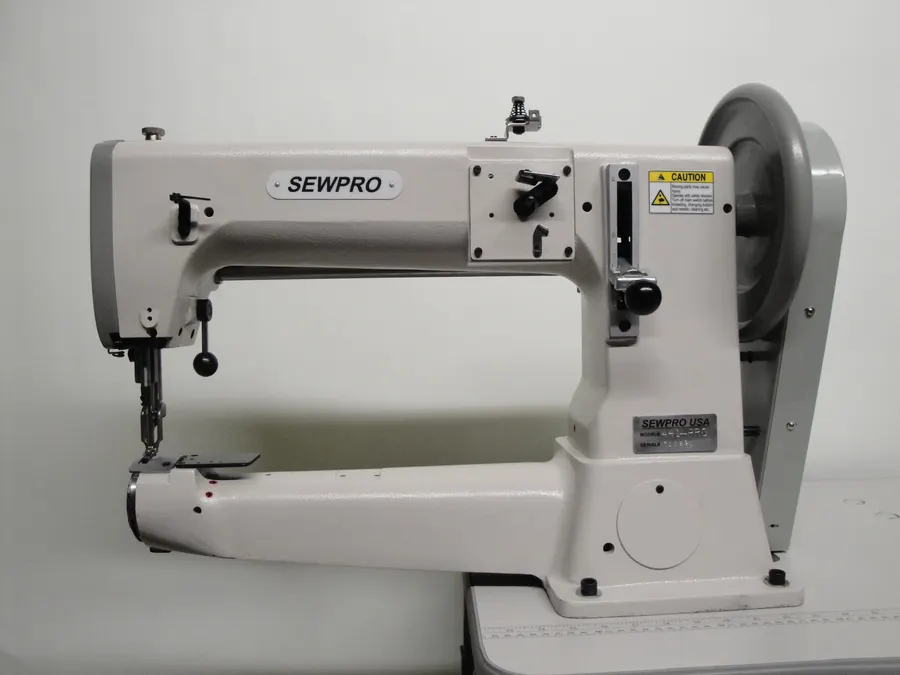 SEWPRO 441-PRO441 class cylinder arm walking foot for extra heavy leather
Talk to us
Tell us the machine and what you sew on it. We will match the motor and pulley, and install it in our shop or yours.