
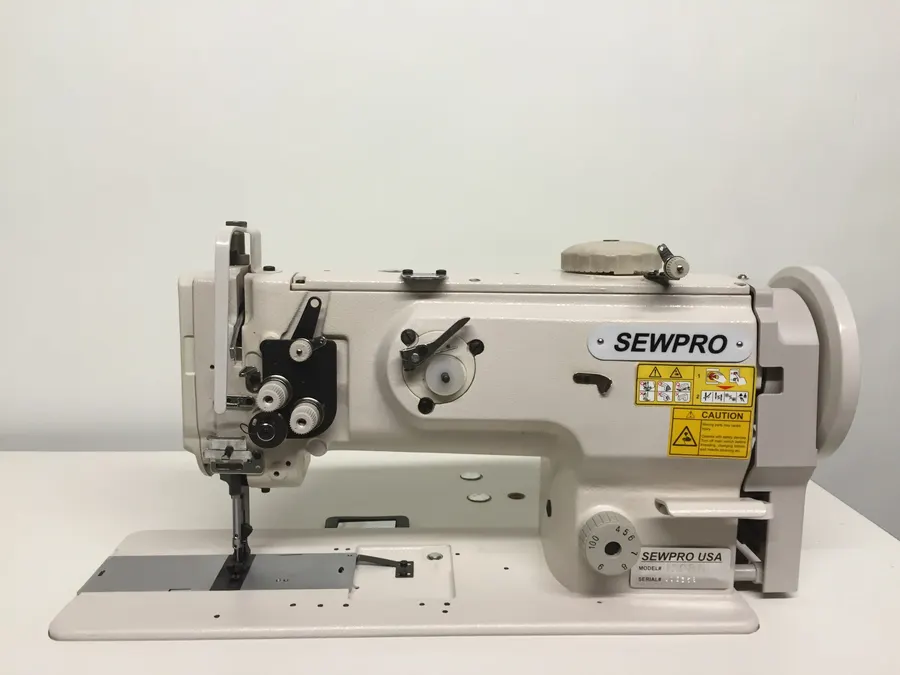
A good used industrial sewing machine can sew for another twenty years. A bad one can cost more in parts and lost days than a new machine would have. The difference is usually visible in fifteen minutes if you know where to look. This is the checklist we use when a trade-in comes through our door.
Before you go: know what you are looking at
- The class, not just the brand. Industrial machines are built on a handful of designs: 1541, 1508, 441, 204, 733 and so on. The class tells you what it can sew and whether parts are easy to find. Look up the model on the plate before you look at the price.
- Whether it fits your work. A beautiful used machine of the wrong type is still the wrong machine. Know your thickest seam and your thread size; our feed types guide and thread chart help.
- Bring your material and thread. Any seller who will not let you sew your own material on the machine is a seller to walk away from.
The checklist
1. Turn it by hand
With the power off, turn the handwheel slowly through several full turns. It should move smoothly with an even resistance. Tight spots, grinding or a knock mean worn bearings, a bent shaft or a hook problem.
2. Look at the hook and bobbin case
Take out the bobbin case and look at the hook point and the race with a flashlight. The point should be sharp and smooth. Burrs, nicks, or a shiny groove worn into the race mean the hook has hit needles many times. A hook can be replaced, but it is a cost to add to the price.
3. Check for play
Hold the needle bar and try to move it side to side and front to back. Do the same with the walking feet. A little movement is normal; clicking or visible play means worn bushings and a stitch that will wander.
4. Feed dog and feet
Feed dog teeth should be sharp, not polished flat. The presser feet should be the right ones for the machine and not ground or bent.
5. Sew
Sew your material with your thread, forward and reverse, at slow and full speed, across a thick seam. Look at both sides: the knot should be buried in the middle of the material, stitches even in length, no loops, no skips. Check the stitch length lever and reverse work through their range.
6. Listen
A healthy industrial head has an even, mechanical sound. Rattles, knocks or a rhythmic click under the bed are worth asking about.
7. Automatic functions
On machines with a thread trimmer, automatic back-tack, foot lift or a pattern controller, test every function. Electronics and air systems are where used machines get expensive. Programmable pattern sewers in particular should be tested with a pattern loaded and running.
8. Motor, table and stand
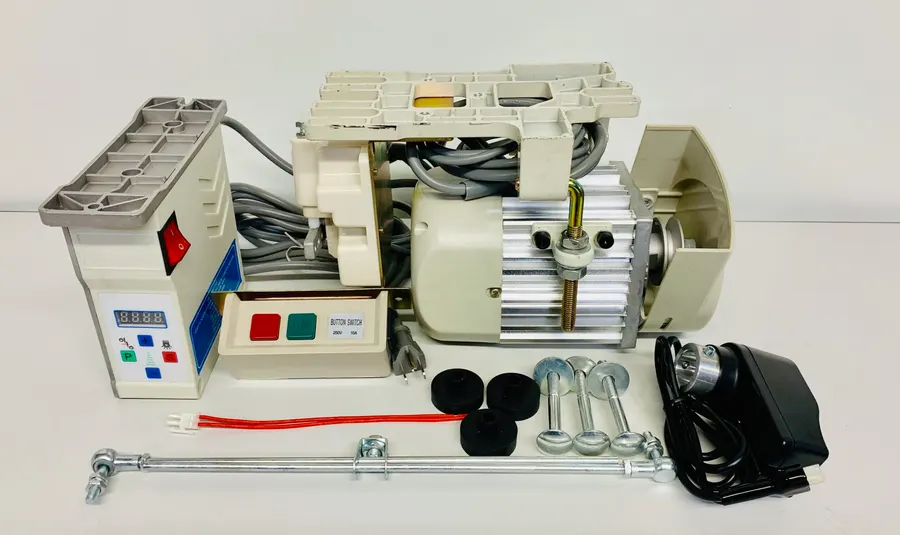
Many used machines still have a clutch motor; plan to replace it with a servo (see servo vs clutch). Check that the table is cut for this head and the stand is solid. A long arm or cylinder arm table is expensive to buy separately.
9. Rust, oil and storage
Surface marks are cosmetic. Rust on the needle bar, presser bar or inside the bed is not. Old, gummy oil can usually be cleaned, but a machine stored in a damp barn for years needs a full overhaul.
| Servo motor | If it has a clutch motor or no motor. |
|---|---|
| Service and timing | Cleaning, oiling, timing check and adjustment. |
| Hook or bobbin case | If either is burred or worn. |
| Needles and feet | A box of the right needles, and feet for your work. |
| Freight or pickup | A head on its table and stand weighs well over 100 pounds. |
Used or new?
Used makes sense when the machine is a common class in good condition, you can sew on it before buying, and you or someone nearby can service it. New makes sense when you need a specific configuration, automatic functions, or a machine set up for your product from day one, and when downtime costs more than the difference in price. A new SEWPRO machine carries a 1 year warranty; used and refurbished machines from us carry 3 months.
We sometimes have trade-ins and refurbished heads, serviced and tested before they go out. They sell before a web page would be written, so ask when you call. If you are buying a used machine elsewhere, we can inspect it, service it and set it up for your work: see repair and maintenance.
Questions people ask
What should I look for when buying a used industrial sewing machine?
Smooth rotation by hand, a sharp and smooth hook point, little play in the needle bar and feet, sharp feed dog teeth, and above all a clean stitch on both sides when you sew your own material with your own thread.
Is a used industrial sewing machine worth it?
Often, if it is a common class in good condition and suits your work. Budget for a servo motor, a service and any worn parts, and compare that total with a new machine set up for you with a warranty.
Do you sell used industrial sewing machines?
Sometimes. Trade-ins and refurbished heads come and go and carry a 3 month warranty. Call and ask what is in the shop.
Can you check a used machine before I buy it?
Bring the head to our shop in Ephrata and we will inspect it, tell you what it needs and set it up for your material.
New machines to compare against
Talk to us
Looking at a used machine, or want to know what is in our shop right now? Tell us the model and what you sew.