
Walking foot, compound feed, triple feed, unison feed, needle feed: the names get used loosely, and different brands mean slightly different things by them. What they all describe is how the machine moves the material from one stitch to the next. Get that right and thick, slippery or layered work sews straight and even. Get it wrong and no amount of tension adjustment will save the seam.
Why feed matters on heavy work
On a basic machine, a toothed feed dog under the plate pulls the bottom layer back while the presser foot holds everything down. The top layer moves only because friction drags it along. On thin cotton that is fine. On four layers of vinyl, a stack of leather or Sunbrella with a foam backing, the bottom layer moves farther than the top, the layers creep, the seam ends uneven and the stitches get shorter where the work gets thicker.
Every feed system on a heavy machine solves the same problem: move the top and the bottom together.
The feed types, one by one
Drop feed
Feed dog only. Standard on home machines and on high-speed industrial machines for garments. Not suitable for anything thick, slippery or layered.
Needle feed
The needle moves forward and back with the feed dog while it is in the material, so it holds the layers together during the feed stroke. Better than drop feed on light to medium layers and common on single and double needle machines for medium upholstery. On its own it does not grip the top layer.
Walking foot
Two presser feet take turns. An inner foot comes down with the needle and moves with the feed, carrying the top layer; an outer foot holds the material while the inner foot lifts and returns. The top layer is driven, not dragged. On industrial machines a walking foot almost always comes with the next two features as well.
Compound feed, triple feed and unison feed
These are three names for the same idea: feed dog, needle and walking foot all move together. The bottom is pushed by the feed dog, the middle is held by the needle, the top is carried by the inner foot. This is the standard feed for upholstery, canvas, leather and anything heavy. Some brands use “unison” when the three move in exactly the same stroke and “compound” for the same thing; in practice you can treat them as one category.
Top and bottom feed
A driven top foot or wheel and a feed dog, without the needle moving. This is how heavy zig-zag machines work, because the needle has to swing from side to side and cannot also move with the feed. The 2156 and 2150-CBZ are examples.
Roller feed
Driven wheels instead of feet, above and sometimes below. Common on post bed machines for leather and shoe uppers, because a wheel can follow a tight curve and does not mark finished leather the way a toothed foot can. The 1595-DL has top and bottom roller feed.
Puller feed
An extra driven roller behind the foot that pulls the finished seam. Used on long straight seams in canvas, tarps and webbing, where the weight of the material would otherwise drag and shorten the stitch.
| Upholstery, auto trim, vinyl, foam-backed fabric | Compound / triple feed walking foot |
|---|---|
| Marine canvas, awnings, Sunbrella | Compound feed, often on a long arm; puller for long seams |
| Leather goods, belts, holsters | Compound feed; roller feed for fine topstitching on a post bed |
| Sails, neoprene, nets, webbing with zig-zag | Top and bottom feed zig-zag |
| Long straight seams in tarps or webbing | Compound feed plus puller |
| Garments, light fabric | Drop feed or needle feed is enough |
What to check on a walking foot machine
Alternating foot lift
The height the walking feet rise on each stitch. Raise it to climb over thick seams and welt cord; lower it on flat work for a smoother, quieter feed. Good heavy machines have a lever or dial for it, so you do not need a tool.
Foot lift
How high the foot rises to let material in: 16mm is typical for compound feed flatbeds such as the 1541S, 20 to 24mm for extra heavy machines, and 7/8 inch on a 441 class.
Hook size
Feed is only half of heavy sewing. A large or double-capacity hook holds heavy thread and a big bobbin. Check the thread range in the technical data of any machine before you buy it.
Questions people ask
What is the difference between a walking foot and a compound feed?
A walking foot is the pair of alternating presser feet that carry the top layer. Compound feed adds a moving needle and the feed dog, so all three move together. On industrial machines the two usually come together, and the terms are often used for the same machine.
Is triple feed the same as compound feed?
In practice yes: feed dog, needle and walking foot moving together. Unison feed is a third name for the same thing.
Can I add a walking foot to a regular industrial machine?
No. On industrial machines the walking foot is part of the head's mechanism, not an attachment. A walking foot attachment for a home machine exists but does not compare.
Do I need a walking foot for vinyl?
Yes. Vinyl is grippy on one side and slippery on the other, and without a walking foot the layers creep. A compound feed machine with a smooth or Teflon foot sews vinyl cleanly.
Machines in this article
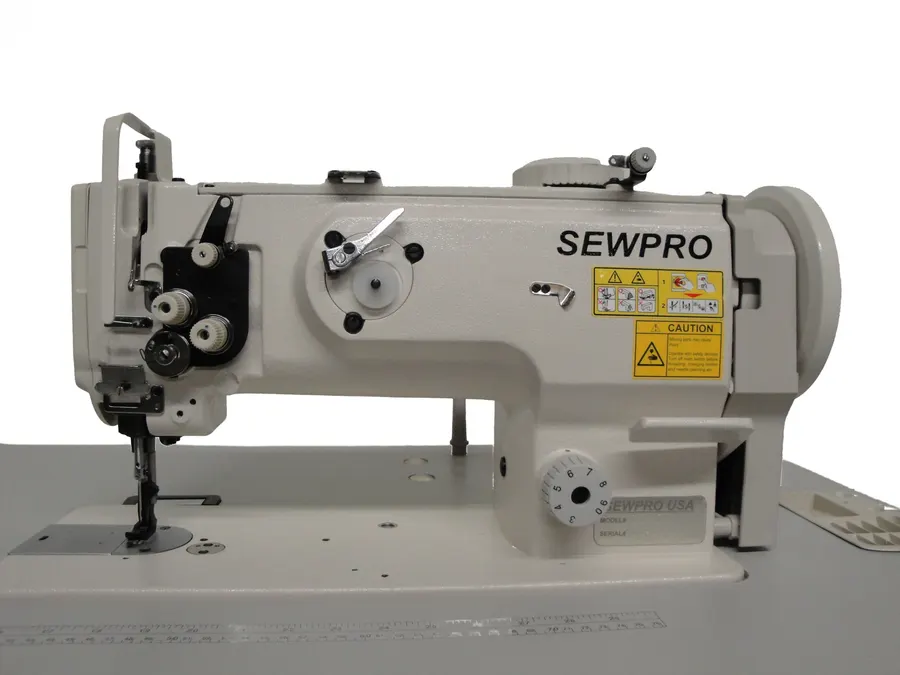
- SEWPRO 1541SHeavy-Duty Walking Foot Lockstitch Sewing Machine
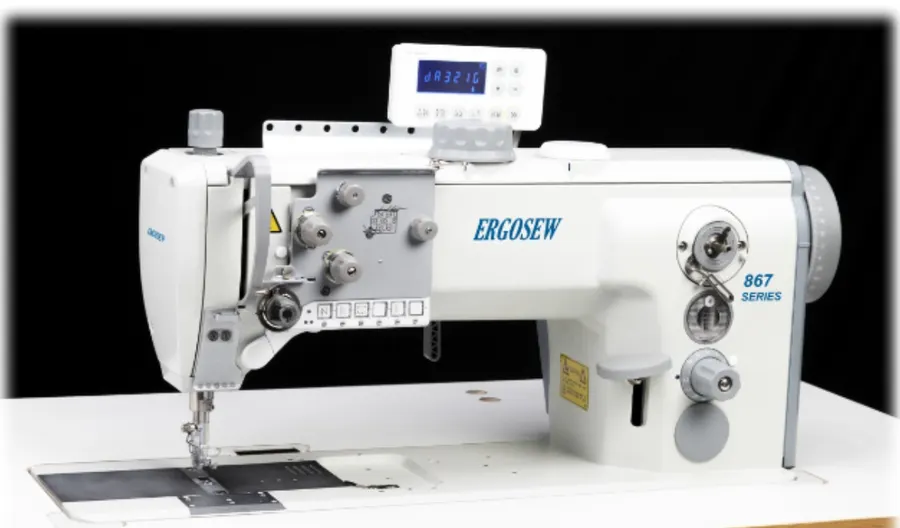 ERGOSEW 867 seriesMedium-Heavy Triple Feed Lockstitch Sewing Machine
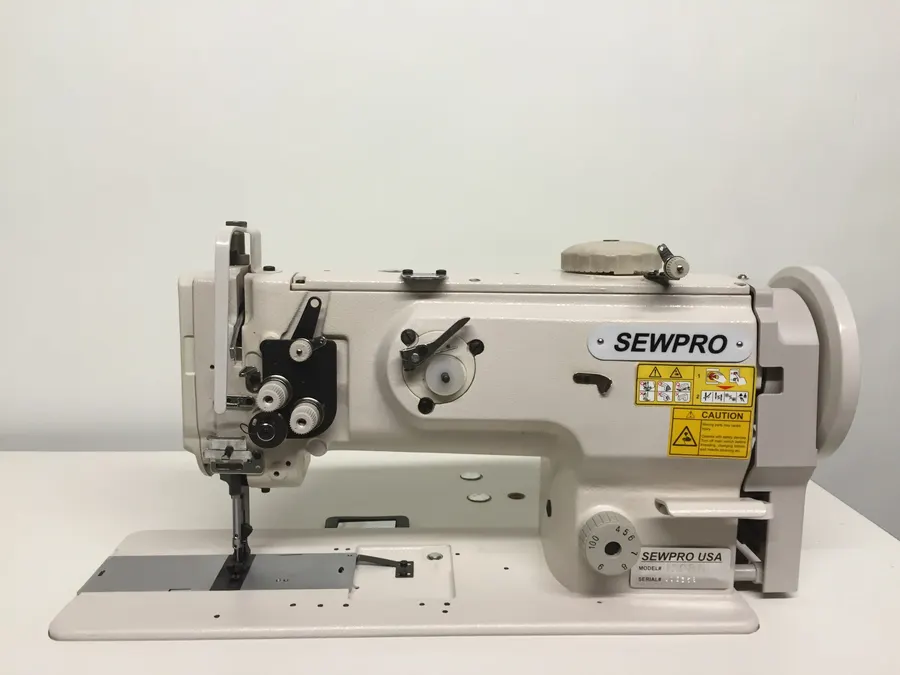 SEWPRO 1508NHUnison-Feed Lockstitch for Extra Heavy-Weight Materials
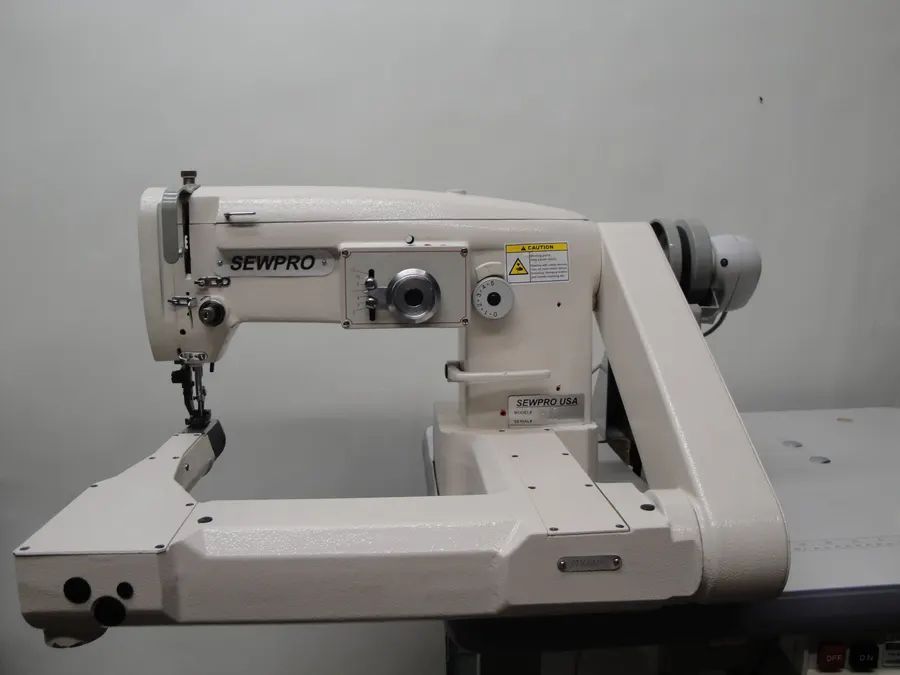 SEWPRO 2156Feed-off-the-arm top and bottom feed zig-zag machine
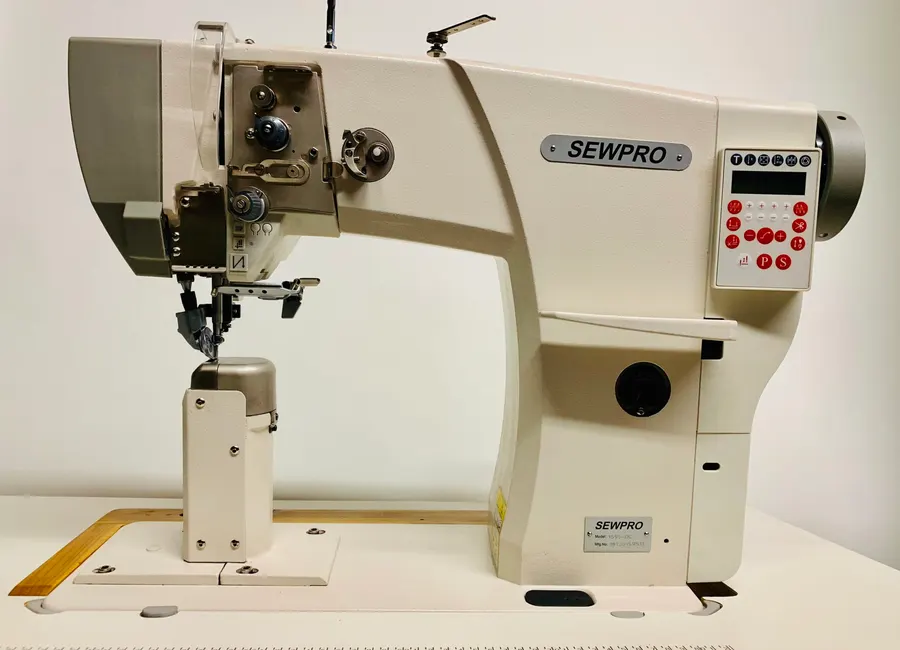 SEWPRO 1595-DLPost-Bed Roller Feed Sewing Machine for Leather and Upholstery
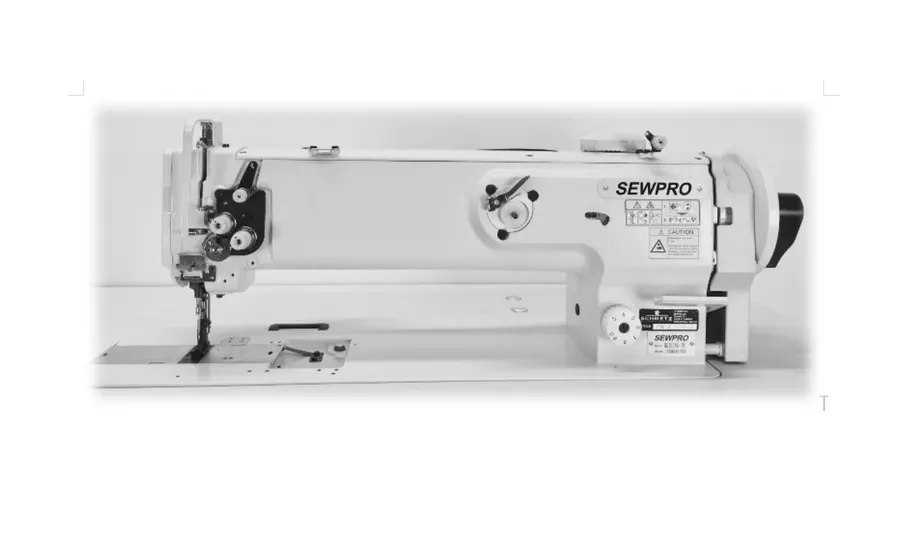 SEWPRO 1508L-18Long-Arm Walking Foot Lockstitch Machine
Talk to us
Describe the material and the seam, and we will tell you which feed you need and which machine has it.