
Most people shopping for a leather sewing machine ask which machine is best. The better question is how thick your stack is and what thread you want to sew it with. Those two numbers pick the machine class for you, and the shape of the work picks the bed. This guide walks through both, with the machines we set up for leather shops every week.
Start with the stack, not the machine
Leather is sold by weight in ounces, and one ounce is about 1/64 inch (0.4mm) of thickness. What matters to the machine is the total stack under the foot at the thickest point of the seam, including any lining, welt or reinforcement. Add up the layers and you get a number the machine has to clear.
| Wallets, card holders, watch straps | Two layers of 2 to 4 oz: about 1/8 inch. Thread 69 to 138. |
|---|---|
| Bags, purses, small cases | Two or three layers of 3 to 5 oz, more at handles: 1/8 to 1/4 inch. Thread 92 to 138. |
| Belts and dog collars | 8 to 10 oz plus a liner: 1/4 to 3/8 inch. Thread 138 to 277. |
| Holsters, sheaths, gun belts | Two layers of 7 to 9 oz plus a welt: 3/8 to 1/2 inch. Thread 207 to 346. |
| Saddles, harness, tack | Up to 3/4 inch at buckle ends. Thread 277 to 415. |
If the thickest seam you sew regularly is under 1/4 inch, you need a different machine from a shop sewing 1/2 inch holsters. One machine can rarely do both well: a heavy machine leaves big holes and a coarse stitch on a wallet, and a light machine cannot pierce or pull a tight stitch through a gun belt.
Thread decides the hook
Heavy thread needs a large hook, a long needle bar stroke and a big needle. The thread sizes in this article are commercial sizes for bonded nylon or polyester (69, 92, 138, 207, 277, 346, 415). If you are not sure what those mean, our thread and needle size chart lays them out with the needle for each.
- 69 to 138 thread runs on a walking foot machine with a large rotary hook and 135x17 or 134-35 needles. This covers wallets, bags, belts and most upholstery-weight leather.
- 138 to 415 thread needs a large shuttle hook and the 794 (7x23) needle system. That is the 441 class and the 204/205 extra heavy machines.
A good rule: if you want the stitch to look like saddle stitching, with thick thread you can see from across the room, you are in the second group.
Then pick the bed
The bed is the shape of the machine under the needle, and it decides what the piece can do while you sew it.
Flatbed: flat goods
Belts, straps, wallets before assembly, bag panels, chaps and upholstery leather. A flatbed walking foot such as the 1541S is the most versatile leather machine for a shop that also sews canvas or vinyl. It sews up to about 3/8 inch with 138 thread.
Cylinder arm: anything that closes into a tube
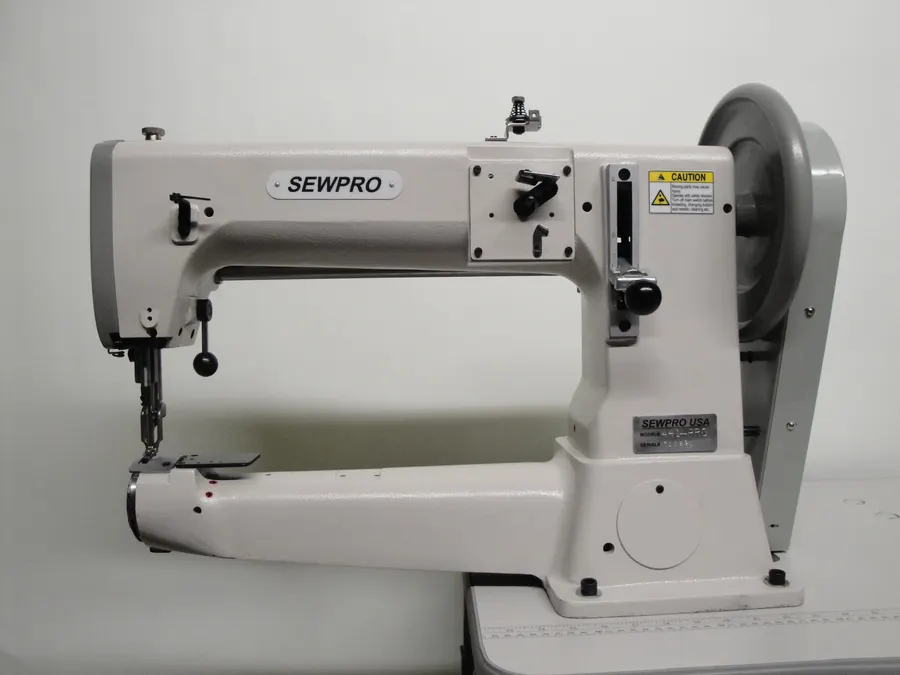
Bag bottoms and corners, boot shafts, holsters, sheaths and saddle parts. Once a piece is sewn into a tube or a pocket, a flatbed cannot reach the next seam. The 1341 and 1342-7 handle bags and small goods with 69 to 138 thread; the 441-PRO handles holsters, saddlery and anything up to 3/4 inch.
Post bed: three-dimensional and decorative work
Shoe uppers, structured bags, gloves, and decorative topstitching close to an edge. The sewing point sits on a post, so the piece can wrap around it. The 1710D is our usual leather post bed; the 18365-17 and 8360BL have 17 inch posts for boot shafts and deep bags.
The 441 class: when you need it, and when you do not
The 441 is the machine most leather workers have heard of, because it is the one that sews holsters and saddles. It has a cylinder arm, a compound feed, a large shuttle hook, 7/8 inch of foot lift and the 794 needle system, and it is built to run slowly with full force. If your work is 3/8 inch and up, or you want 277 to 346 thread, it is the right machine.
If your work is wallets, small bags and watch straps, a 441 is too much machine. It makes large holes, it is slow, and it cannot sew the fine stitch that thin leather looks best in. Buy a 1341 or 1541S instead and you will have a better result and change left over.
Details that matter on leather
Slow speed with full torque
Leather is sewn slowly around curves and corners, often a stitch at a time. The motor has to hold full force at very low speed, which is why every leather machine we deliver has a servo motor, and the heavy heads also get a speed reducer pulley. See servo vs clutch motor for why this matters.
Leather point needles
A round point needle pushes leather aside and the hole closes around the thread, which looks untidy and weakens the seam. Leather point needles (LR, S or D points from Schmetz) cut a clean slit at a set angle, which gives the slanted, even stitch leather is known for. We stock them as an authorized Schmetz dealer.
Feet and guides
A smooth or Teflon foot for finished and tacky leather, a narrow foot for edges, a roller guide for parallel lines, and edge guides for topstitching. We fit the ones your work needs when we set up the machine, so you are not hunting for parts afterward.
Stitch length
Long stitches look better on leather than on fabric. Belts and holsters typically run 6 to 8 stitches per inch; wallets and bags 8 to 10. A machine with at least 9mm of stitch length gives you room.
Test it on your leather
Every leather machine we sell is set up and test-sewn before delivery, and we would rather sew your material than ours. Send a sample of your thickest seam and we will run it on the machine you are considering and send you the result. See the leather goods page for the full range we recommend.
Questions people ask
What is the best sewing machine for thick leather?
For leather 3/8 inch and up, or thread 207 and heavier, a 441 class cylinder arm such as the 441-PRO. It sews up to 3/4 inch with 138 to 346 thread and has a large shuttle hook built for heavy thread.
Can a home sewing machine sew leather?
Thin garment leather in one or two layers, slowly. A home machine has drop feed only, a small hook and a light motor, so it skips, stalls or leaves a loose stitch on anything thicker. For bags, belts or holsters you need an industrial walking foot or cylinder arm.
Do I need a walking foot to sew leather?
Yes for anything beyond thin leather. A walking foot or compound feed moves the top and bottom layers together, so the layers do not shift and the stitches stay even. Read more in our guide to sewing machine feed types.
What thread should I use for leather?
Bonded nylon or polyester. 69 to 92 for small goods, 138 for bags and belts, 207 to 277 for holsters and gun belts, 346 to 415 for saddlery. Match the needle to the thread; our size chart has the pairs.
Machines in this article
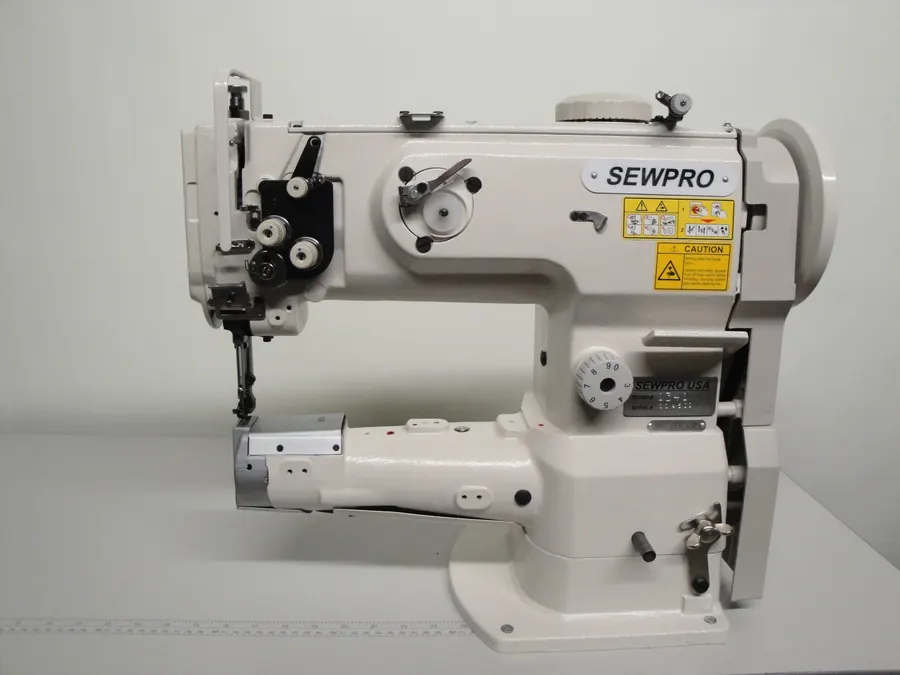 SEWPRO 1341Cylinder arm walking foot lockstitch, single needle
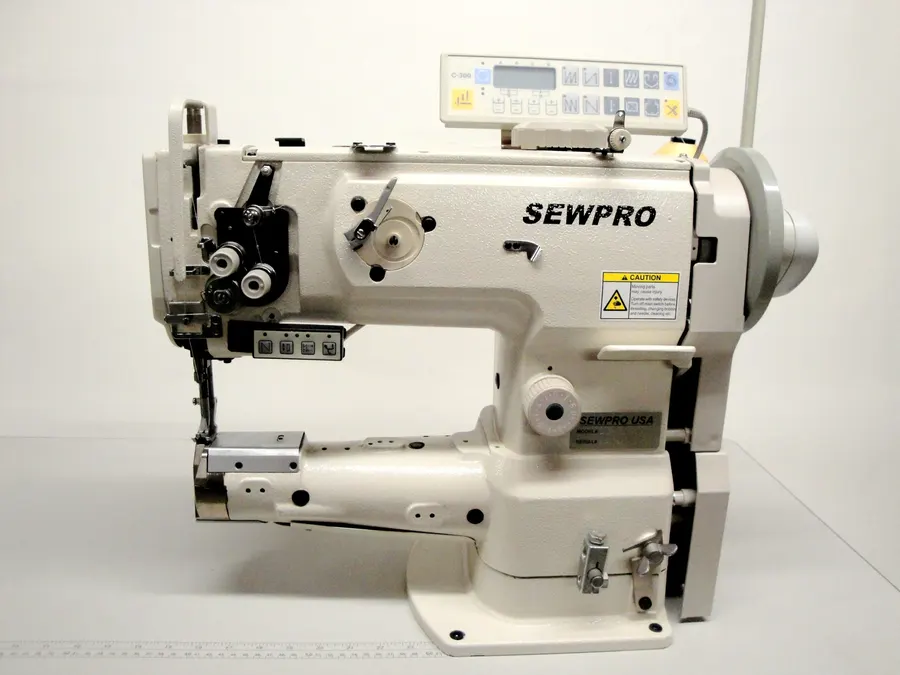 SEWPRO 1342-7Cylinder-Bed Unison-Feed Lockstitch Sewing Machine
- SEWPRO 441-PRO441 class cylinder arm walking foot for extra heavy leather
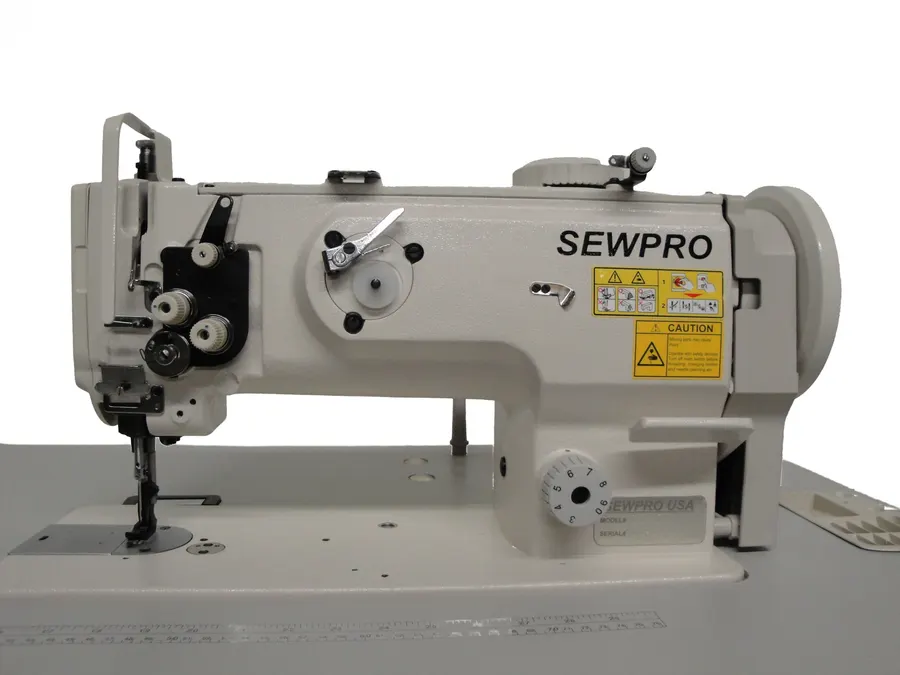 SEWPRO 1541SHeavy-Duty Walking Foot Lockstitch Sewing Machine
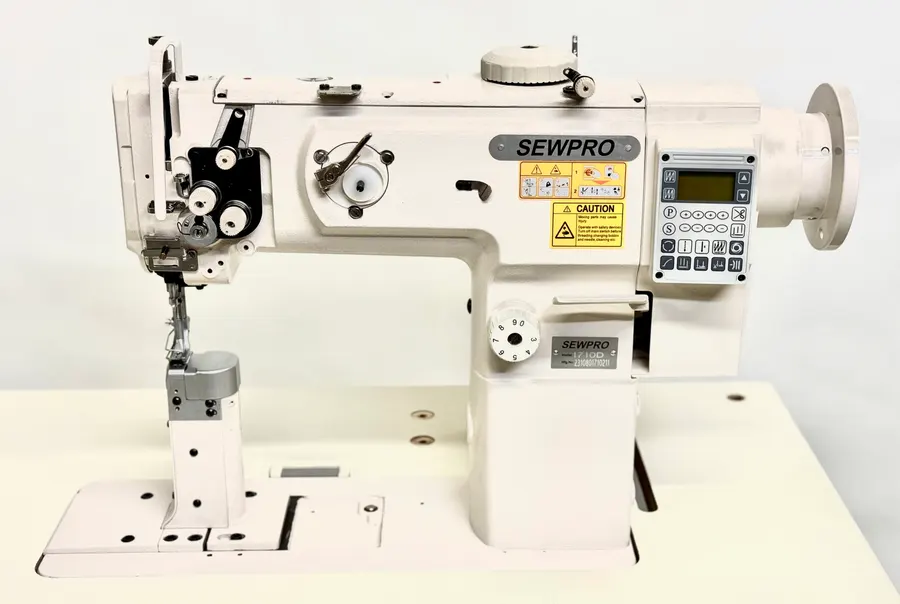 SEWPRO 1710DPost-Bed Lockstitch Sewing Machine with Direct Drive
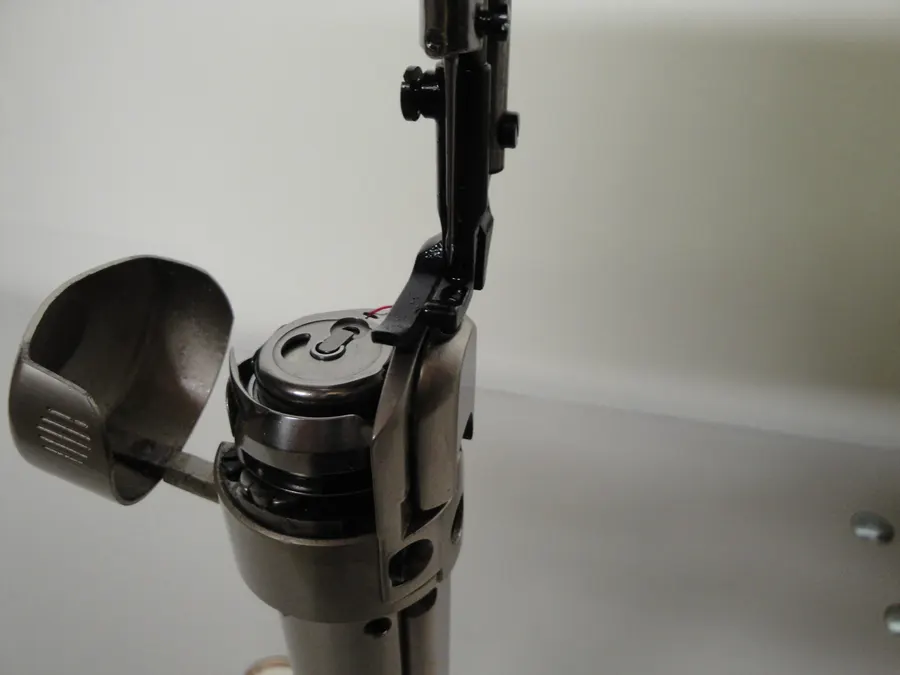 SEWPRO 18365-17Extra High Post-Bed Walking Foot Lockstitch Machine
Talk to us
Tell us your thickest seam and the thread you want to use. We will point you to one machine and set it up on your leather.